 OPEN ANDES
Community Claims Against Mining Exploitation in Argentina
This essay presents the strategic analysis derived from the territorial, socio-environmental, and legal survey conducted by the authors. To consult the complete dossier, documentary research lines, and institutional repositories, download the full Working Paper here (PDF).
The Editors.
I. The Legal-Hydrological Dispute Under the Energy Transition
Mining conflict in Argentina encompasses traditional metalliferous projects—such as gold, copper, and uranium—as well as the recent expansion of lithium and so-called critical minerals, those deemed indispensable for the energy transition. Argentine mining conflicts cannot be reduced to a generic opposition between mining and the environment. Each territory combines community histories, ecological conditions, production models, Indigenous rights, employment expectations, benefit distribution, administrative decisions, and corporate strategies.
The core legal agenda consists of determining whether mining permits, impact assessments, and participation mechanisms satisfy constitutional, statutory, and international obligations regarding prevention, precaution, information, participation, Indigenous consultation, access to justice, and the protection of environmental defenders. The central legal question is whether the State can demonstrate that decisions on mining projects were adopted with sufficient information, adequate environmental assessment—including cumulative impacts where applicable—effective participation, Indigenous consultation when legally required, independent oversight, and prevention and remediation mechanisms. The energy transition and the demand for critical minerals neither suspend nor lower these obligations.
The promotion of investment, exports, and employment does not displace constitutional obligations of prevention, information, participation, and rights protection. A systematization by Wagner and Walter (2020), cited by the Environment and Natural Resources Foundation (FARN), an Argentine organization specializing in environmental litigation and policy, analyzes 38 predominantly large-scale metalliferous conflicts recorded between 2003 and 2018, identifying Andalgalá, Famatina, Esquel, and Bajo La Alumbrera as high-intensity cases.¹
II. Material Inertia, Power Asymmetry, and Basin Litigation
The main grounds for community claims include water protection, cumulative environmental impacts, the defense of Indigenous and peasant territories, access to information, prior consultation, public participation, benefit distribution, and the criminalization of protest. Regarding water and hydrological systems, claims involve fears or allegations of contamination, declining flows, pressure on aquifers, alterations to vegas (high-altitude wetlands) and high-Andean wetlands, and competition among mining, domestic, agricultural, and tourism water uses. Evaluating each venture in isolation may fail to capture the combined effect of multiple projects on a shared basin, salt flat, glacier, territory, or ecological corridor. Project-by-project assessment is insufficient when multiple developments share basins or ecosystems, making cumulative analysis technically necessary.
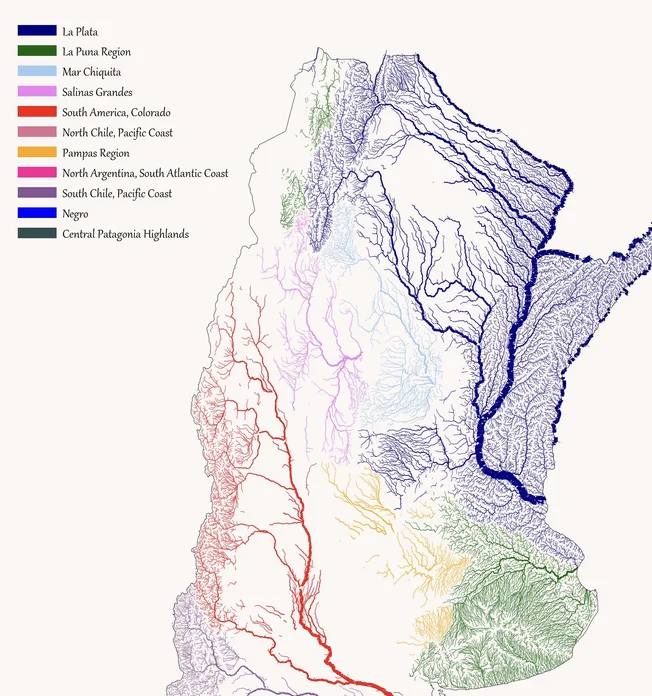
Vectorized map of river basins in Argentina.
Compounding this physical pressure on basins is a marked technical and informational asymmetry. Projects require specialized knowledge and data access, whereas communities frequently lack resources to commission independent expert reports and monitor compliance. Communities demand complete studies, baseline data, monitoring records, permits, incident reports, water usage figures, lists of chemicals used, and inspection outcomes. Simultaneously, territorial inequality persists where economic benefits are distributed outside producing localities while impacts and risks concentrate locally. Mining can affect grazing, agriculture, tourism, mobility, culturally significant sites, community practices, and traditional livelihoods. Consequently, demands arise for local employment, local supplier procurement, infrastructure, royalties, and transparent benefit sharing, alongside disputes over who bears the costs.
A democratic participation deficit runs through these processes. The controversy is not merely whether a hearing took place, but whether the community received sufficient information in advance, was able to participate on equal terms, and obtained a reasoned response to its observations. Communities challenge procedures that are belated, purely informational, or lacking real influence on decisions, underscoring the legal distinction between Indigenous consultation and general public hearings. Furthermore, in several conflicts, arrests, criminal prosecutions, threats, or disproportionate use of force have been reported.
Territorial trajectories show how these tensions have fractured extractive consensus. The conflict in Esquel, in the Patagonian province of Chubut, became a landmark precedent for citizen participation regarding a metalliferous mining project. In March 2003, a local plebiscite yielded an ~81% vote against the project, mobilizing support that led to Provincial Law 5001, which banned open-pit metalliferous mining and the use of cyanide in mining processes—a direct precursor to the 2021 mining zoning conflict and the subsequent repeal of that zoning law.² In 2012, Loncopué, in the province of Neuquén, held a popular referendum on banning open-pit mining and chemical leaching techniques using toxic substances within the municipal jurisdiction; with roughly 72% turnout, 82% voted in favor of the ban, bringing municipal autonomy, provincial jurisdiction over natural resources, and the limits of local decisions regarding regional-scale projects into sharp focus.³
In Catamarca, Andalgalá exhibits a long-standing conflict linked to Bajo La Alumbrera and the Agua Rica and MARA projects, where community actors such as the El Algarrobo Assembly and self-organized neighbors (vecinos autoconvocados) sustain claims over water availability and quality, impacts on the Aconquija mountain range system (which supplies water to the area), cumulative impact assessments, citizen participation, and allegations of criminalization or judicialization of protest.⁴ Similarly, Famatina and Chilecito, in the province of La Rioja, represent another emblematic case of community resistance centered on water protection, defense of the mountain and territory, and the compatibility of mining projects with local economies and ways of life.
Among operating mines, the case of Jáchal and the Veladero mine in San Juan province is central to analyzing state and corporate responses to environmental incidents. The September 13, 2015 incident involved a cyanide solution spill that reached the Potrerillos River, according to institutional reports released by the United Nations and the United Nations Office for Project Services (UNOPS). In 2022, United Nations Special Procedures experts (independent rapporteurs of the Human Rights Council) sent communication AL ARG 2/2022 to the Argentine State, compiling reports of alleged spills between 2015 and 2022 alongside concerns from local communities, including San José de Jáchal, regarding early warnings, monitoring, and access to test results.⁵ Conversely, lithium expansion in Fiambalá and Tres Quebradas, in Catamarca, requires distinguishing environmental claims from economic and labor demands, as local debates combine concerns over water, tourism, and infrastructure with demands for employment, supplier contracting, and benefit sharing—demonstrating that criticism of a company or project does not necessarily equate to blanket opposition to mining.
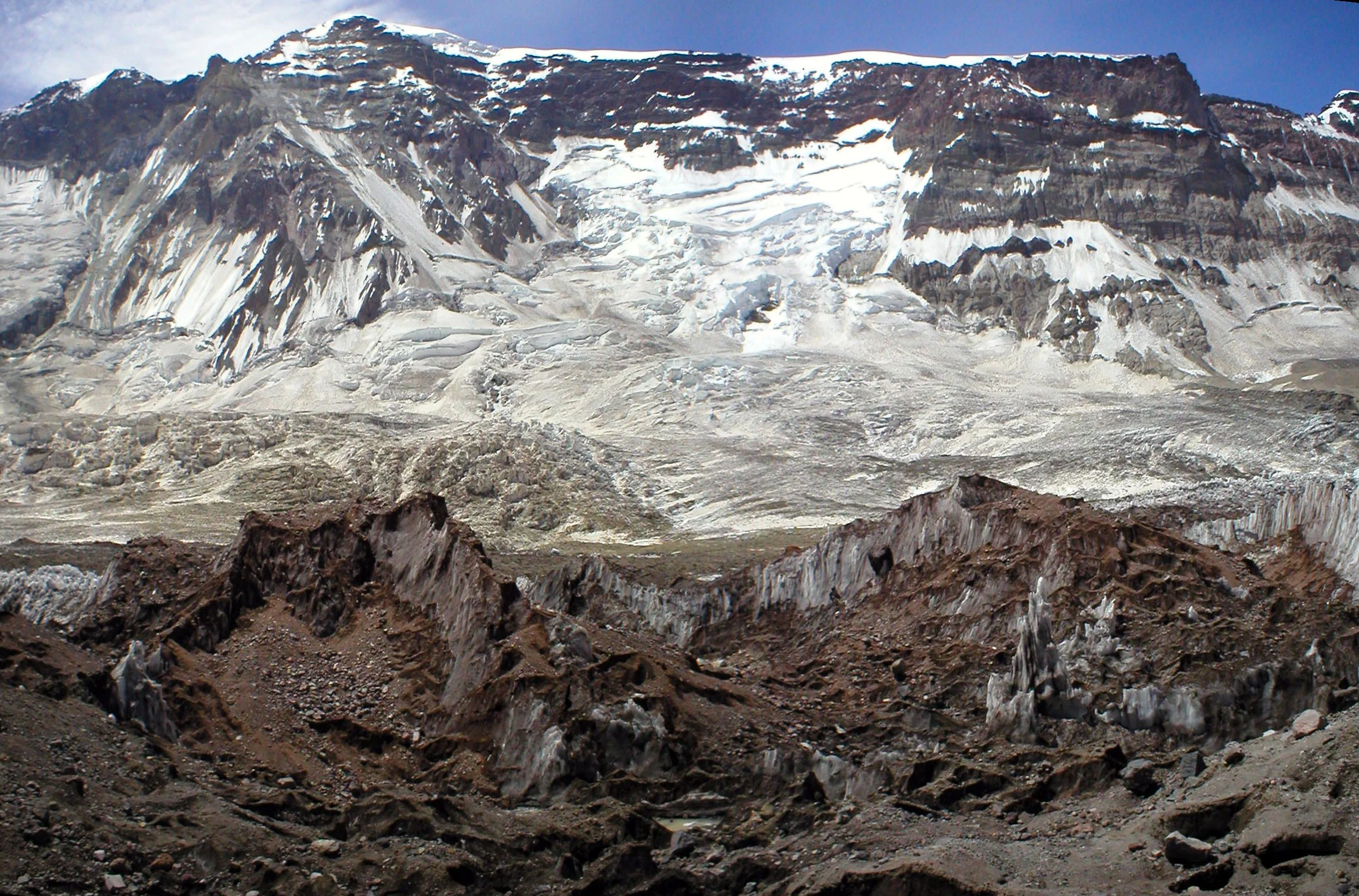
High mountain range in San Juan Province, Argentina.
However, the shift toward higher courts has reshaped disputes in lithium and borate basins. This legal framework rests on Article 41 of the National Constitution, recognizing the right to a healthy environment; Article 43, enabling collective amparo actions (expedited judicial remedies to protect fundamental rights); and Article 75, paragraph 17, recognizing the ethnic and cultural pre-existence of Argentina’s Indigenous peoples and their participation in managing their natural resources.⁶ This is reinforced by General Environmental Law 25.675, establishing prevention and precaution principles and regulating environmental impact assessment, information, and citizen participation;⁷ Law 25.831 on free access to public environmental information;⁸ Law 27.566 ratifying the Escazú Agreement (regional treaty on access to information, public participation, and justice in environmental matters), including specific provisions for environmental human rights defenders;⁹ Law 24.071 ratifying International Labour Organization (ILO) Convention 169 on Indigenous and Tribal Peoples regarding prior consultation through appropriate procedures;¹⁰ Law 24.585 on environmental protection for mining activities;¹¹ and Law 26.639 establishing minimum national standards (presupuestos mínimos) for the preservation of glaciers and the periglacial environment.¹² The latter was amended in April 2026 by Law 27.804, which focuses protection on the hydrological functions of glaciers and the periglacial environment as strategic water reserves and basin recharge sources, tasks provincial authorities with identifying them through technical-scientific studies and determining via environmental impact assessments which activities significantly alter them, and excludes glaciers listed in the National Inventory that such authorities find lack those hydrological functions—a reform the Executive Branch presented as a way to streamline the regulatory framework and strengthen environmental federalism, and which environmental organizations contest.¹³
Under this framework, in the Salar del Hombre Muerto, Catamarca, the Atacameños del Altiplano community has raised claims regarding water and mining project impacts in the area. On March 13, 2024, the Court of Justice of Catamarca (the province’s highest court) issued Interlocutory Ruling No. 8 in Guitian, Román E. v. National Executive Branch et al. re: Environmental Amparo Action (Court Case No. 054/2022), filed by the traditional leader (cacique) of the Atacameños del Altiplano community against authorizations for lithium projects in the Salar del Hombre Muerto basin—including Fénix and Sal de Vida—and water permits from the Los Patos River, alleging the drying of the Trapiche River wetland (vega) caused by water extraction for the Fénix project.¹⁴ As a precautionary measure while proceedings continue, the court did not suspend existing permits, but ordered a comprehensive, cumulative environmental study and access to information, ruling by majority not to grant new permits in the Los Patos River area until that study is completed. In March 2025, the Court kept that injunction in force upon accepting the province’s withdrawal of its request to modify it.¹⁵
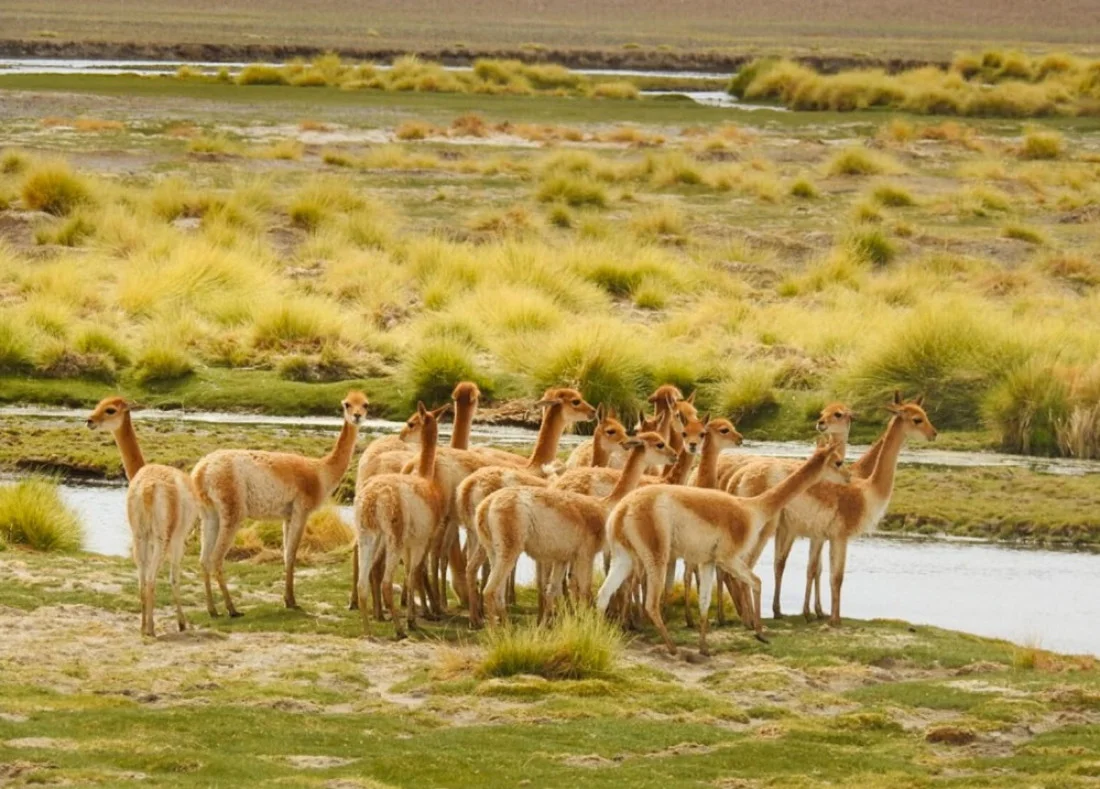
High-Andean wetlands in Argentina.
Simultaneously, in the Salinas Grandes and Laguna de Guayatayoc basin across Jujuy and Salta, communities have demanded effective participation in decisions regarding lithium and borate projects, complete environmental information, and protection of water systems and livelihoods, drafting the Kachi Yupi (Salt Footprints) community protocol as a central benchmark for consultation procedures.¹⁶ On March 7, 2025, as reported by FARN, the Supreme Court of Justice of Jujuy granted the amparo filed by FARN and Indigenous communities of the basin, recognizing the right of access to environmental information regarding lithium and borate mining claims (pedimentos mineros) and upholding the 2022 ruling by environmental judge María Laura Flores.¹⁷ Furthermore, pending before the Supreme Court of Justice of the Nation (CSJN) under original jurisdiction is the environmental amparo Comunidad Aborigen de Santuario de Tres Pozos et al. v. Province of Jujuy et al. re: Environmental Amparo (CSJ 2637/2019), in which the Court requested reports from both provinces and the National State in 2023 and declared itself competent in October 2025 because the dispute involves an interjurisdictional water resource shared by Jujuy and Salta.¹⁸
This conflict has also escalated to the inter-American system, where the intersection between mining in Argentina and the Inter-American Commission on Human Rights (IACHR)—the Organization of American States (OAS) body overseeing human rights compliance across the Americas—centers on petitions and hearings regarding the impacts of critical mineral and fossil fuel extraction on Indigenous territories, water, and the environment. On November 15, 2024, during its 191st period of sessions, the IACHR held a regional hearing on the impacts of mineral extraction in the context of the energy transition, featuring presentations by FARN, the PUCARÁ Assembly of Catamarca (the grassroots organization that brought the Atacameños del Altiplano case), and community representatives from Salinas Grandes and Laguna de Guayatayoc.¹⁹ Subsequently, the 197th period of sessions took place in Panama from October 26 to 30, 2026, including an ex officio hearing on October 27 regarding critical mineral extraction for the energy transition, in which mining company representatives participated for the first time.²⁰ Added to these are a July 22, 2025 public hearing in which Mapuche organizations from Neuquén, Río Negro, and Mendoza testified regarding mining, oil, and gas projects—including Vaca Muerta (Argentina’s primary unconventional hydrocarbon formation, in Neuquén)—and territorial evictions, as well as a precautionary measures request filed in 2022 by the Peace and Justice Service (SERPAJ) following reports of protest repression against the MARA Project in Andalgalá.²¹
III. Prospective Inference and Falsification Condition
Judicialization can be a legitimate avenue for securing environmental protection, but it does not replace the administrative duty to prevent harm, inspect operations, and provide information. A mining policy compatible with human rights requires that communities not be treated as obstacles, but rather as rights-holders and genuine participants in decisions affecting their territories. Conclusions must remain open to the evidentiary record of each dossier, as not all projects carry the same impact, not all communities hold identical positions, and not all allegations possess the same degree of corroboration.
In prospective terms, this thesis regarding the impact of cumulative basin assessments would be formally refuted if the Supreme Court of Justice of the Nation rules on the merits of Comunidad Aborigen de Santuario de Tres Pozos (CSJ 2637/2019) by dismissing the mandatory nature of interjurisdictional hydrological assessments, or if ongoing lithium and copper projects succeed in executing new water extraction permits without precautionary suspensions over the next twenty-four months.
Notes
- Lucrecia Wagner and Mariana Walter, “Cartografía de la conflictividad minera en Argentina (2003-2018): Un análisis desde el Atlas de Justicia Ambiental,” in Virginia Toledo López et al., Cartografías del conflicto ambiental en Argentina 3 (Buenos Aires: Ciccus, 2020), 247–278, https://biblioteca.clacso.edu.ar/clacso/se/20200508062134/Cartografias-del-conflicto-ambiental.pdf.
- Province of Chubut, Law 5001 (2003; currently Law XVII No. 68); Law XVII No. 149 (zoning, passed December 15, 2021) and its repeal, per “Siete provincias frenan la minería con leyes propias,” Más Energía (LM Neuquén), https://mase.lmneuquen.com/mineria/siete-provincias-frenan-la-mineria-leyes-propias-cuales-son-y-que-dicen-n1261815; March 23, 2003 plebiscite results, https://www.aacademica.org/000-024/213.pdf.
- Municipality of Loncopué, Ordinance 1054/2012; Superior Court of Justice of Neuquén, Corporación Minera del Neuquén (CORMINE) S.E.P. v. Municipalidad de Loncopué re: Precautionary Measure, May 31, 2012, https://www.marval.com/Publicacion/tribunal-superior-de-justicia-de-la-provincia-de-neuquen-31-05-2012-corporacion-minera-del-neuquen-cormine-sep-c—municipalidad-de-loncopue-s—medida-cautelar-8919; June 3, 2012 referendum results, Salerno, https://cehepyc.uncoma.edu.ar/wp-content/uploads/2013salerno.referendum-loncopue.pdf.
- Mariana A. Katz, “La Naturaleza y su lugar en la identidad colectiva de la población de Andalgalá, Catamarca, Argentina,” Revista nuestrAmérica 10, no. 19 (2022): e6578844. On the current status of the conflict: El Ancasti, November 4, 2026, https://www.elancasti.com.ar/edicion-impresa/otra-vez-incidentes-un-cambio-turno-mara-n498122, and November 6, 2026, https://www.elancasti.com.ar/edicion-impresa/andalgala-mineros-pidieron-cordoba-que-visite-mara-n495764.
- UN Human Rights Council Special Rapporteurs, communication AL ARG 2/2022; Business & Human Rights Resource Centre, “Argentina: UN Special Rapporteurs sign letter about concerns over water contamination caused by Barrick Gold and Shandong Gold operations; companies did not comment,” November 16, 2022, https://www.business-humanrights.org/en/latest-news/argentina-un-special-rapporteurs-sign-letter-about-concerns-over-water-contamination-caused-by-barrick-gold-and-shandong-gold-operations-companies-did-not-comment.
- Constitution of the Argentine Nation, arts. 41, 43, and 75, para. 17.
- Law 25.675, Boletín Oficial, November 28, 2002, arts. 11–13 and 16–21.
- Law 25.831, Boletín Oficial, January 7, 2004.
- Law 27.566, Boletín Oficial, October 19, 2020; Regional Agreement on Access to Information, Public Participation and Justice in Environmental Matters in Latin America and the Caribbean (Escazú, 2018).
- Law 24.071 (enacted March 4, 1992); International Labour Organization, Convention No. 169 concerning Indigenous and Tribal Peoples (1989), art. 6.
- Law 24.585, Boletín Oficial, November 24, 1995.
- Law 26.639, Boletín Oficial, October 28, 2010.
- Law 27.804, enacted April 8, 2026, Boletín Oficial, April 24, 2026, arts. 1, 3 bis, 5, 6, and 8, https://www.argentina.gob.ar/normativa/nacional/norma-425121/texto; Executive Branch position per “Es oficial: Javier Milei promulgó la reforma de la Ley de Glaciares,” Los Andes, https://www.losandes.com.ar/politica/es-oficial-javier-milei-promulgo-la-reforma-la-ley-glaciares-n5988833; FARN, “Escándalo judicial: dejan fuera las pruebas y el respaldo de 850.000 personas contra la reforma de la Ley de Glaciares,” November 20, 2026, https://farn.org.ar/escandalo-judicial-reforma-ley-de-glaciares/.
- Court of Justice of Catamarca, Guitian, Román E. v. National Executive Branch et al. re: Environmental Amparo Action, Court Case No. 054/2022, Interlocutory Ruling No. 8, March 13, 2024, https://juscatamarca.gob.ar/PDF/FalloAmbiental.pdf.
- Ibid., operative clause 4. Votes: Rosales Andreotti (study and information); Figueroa Vicario, joined by Gómez, Saldaño, Martel, and Soria Acuña (majority, also abstaining from new permits); Cáceres (partial dissent). Same case, Interlocutory Ruling No. 4, March 11, 2025, https://jurisprudencia.juscatamarca.gob.ar/public/sentencias/SI Nº 004, Expte Nº 054-2022 Guitian Román E.pdf.
- Indigenous Communities of the Salinas Grandes and Laguna de Guayatayoc Basin, Kachi Yupi – Huellas de la Sal: Procedimiento de consulta y consentimiento previo, libre e informado para las comunidades indígenas de la cuenca de Salinas Grandes y Laguna de Guayatayoc (December 2015), https://cl.boell.org/sites/default/files/protocolo_final.pdf.
- Supreme Court of Justice of Jujuy, March 7, 2025, text at https://drive.google.com/file/d/136kiZnSVhzrlKVt6q9hV2QhMtKRqlWgD/view?usp=sharing; FARN, “La Suprema Corte de Justicia de Jujuy ratifica el derecho de las comunidades de Salinas Grandes y Laguna de Guayatayoc a la información pública ambiental,” March 7, 2025, https://farn.org.ar/la-suprema-corte-de-justicia-de-jujuy-ratifica-el-derecho-de-las-comunidades-de-salinas-grandes-y-laguna-de-guayatayoc-a-la-informacion-publica-ambiental/.
- Supreme Court of Justice of the Nation, Comunidad Aborigen de Santuario de Tres Pozos et al. v. Province of Jujuy et al. re: Environmental Amparo, CSJ 2637/2019 (original jurisdiction), ruling of March 28, 2023 (Fallos 346:209) and ruling of October 16, 2025 on jurisdiction.
- IACHR, 191st period of sessions, regional public hearing, Washington, D.C., November 15, 2024; Due Process of Law Foundation (DPLF), press release, November 12, 2024, https://dplf.org/wp-content/uploads/2024/11/20241112-Organizaciones-y-comunidades-alertan-a-la-CIDH-sobre-los-impactos-a-los-derechos-humanos-de-la-extraccion-de-minerales-para-la-transicion-energetica.pdf; AIDA, November 25, 2024, https://aida-americas.org/en/press/organizations-and-communities-call-intervention-iachr-response-human-rights-impacts-mining.
- IACHR, 197th period of sessions, Panama City, October 26–30, 2026, ex officio hearing of October 27; EFE, “Denuncian ante CIDH riesgos y acuerdos opacos para explotar minerales en Latinoamérica,” ABC Color, October 27, 2026, https://www.abc.com.py/internacionales/2026/10/27/denuncian-ante-cidh-riesgos-y-acuerdos-opacos-para-explotar-minerales-en-latinoamerica/.
- IACHR, public hearing of July 22, 2025; Earthjustice, press release, July 22, 2025, https://earthjustice.org/press/2025/mapuche-defend-against-extractive-industry-and-forced-evictions-from-ancestral-lands-in-argentina. Precautionary measures request filed by SERPAJ on May 19, 2022, per MiningWatch Canada, https://www.miningwatch.ca/sites/default/files/cidhandagalaenglish.pdf.
Lautaro Ezequiel Pittier es Abogado. Profesor Adjunto de Derechos Humanos y Derecho Constitucional en la Universidad Nacional de Lomas de Zamora (UNLZ) y Director de Asuntos Jurídicos de su Facultad de Derecho. Director del Instituto de Derechos Humanos del Colegio de Abogados de Lomas de Zamora. Docente también en la UAI y en la ECAE. Ex relator del fuero Contencioso Administrativo Federal de la Ciudad Autónoma de Buenos Aires.
Nahuel Agustín Bento es Abogado y Procurador, Universidad de Mendoza. Especialista y Magister en "Justicia Constitucional y Derechos Humanos", Universidad Alma Mater de Bolonia, Italia. Magister en "Derecho Procesal Penal y Oratoria Forense", Universidad Latinoamericana de Ciencias Jurídicas de Miami, EEUU. Especialista en "Docencia en Entornos Virtuales", Universidad Champagnat de Mendoza, Argentina. Doctorando Universidad de Mendoza.
Nota editorial
Este trabajo representa exclusivamente las opiniones del autor o autores. Open Andes es un think tank y editorial independiente, y no adopta posturas institucionales sobre asuntos de política pública.
SHARE KNOWLEDGE