 OPEN ANDES
Latin America between Asia and the United States in the era of critical minerals (2/2)
In this second installment, Danna Mena N. examines the real governance of the Latin American subsoil: the limits of declared sovereignty vis-à-vis international arbitration, the enforceability of community rights under the inter-American standard and the risk of delegating custody of the territory to the logic of military security.
Drawing on an analysis of UN Resolution 1803, ILO Convention 169 and the jurisprudence of the Inter-American Court, the author proposes a five-point regional positioning so that Latin America stops being a setting and becomes a strategic actor.
The Editors.
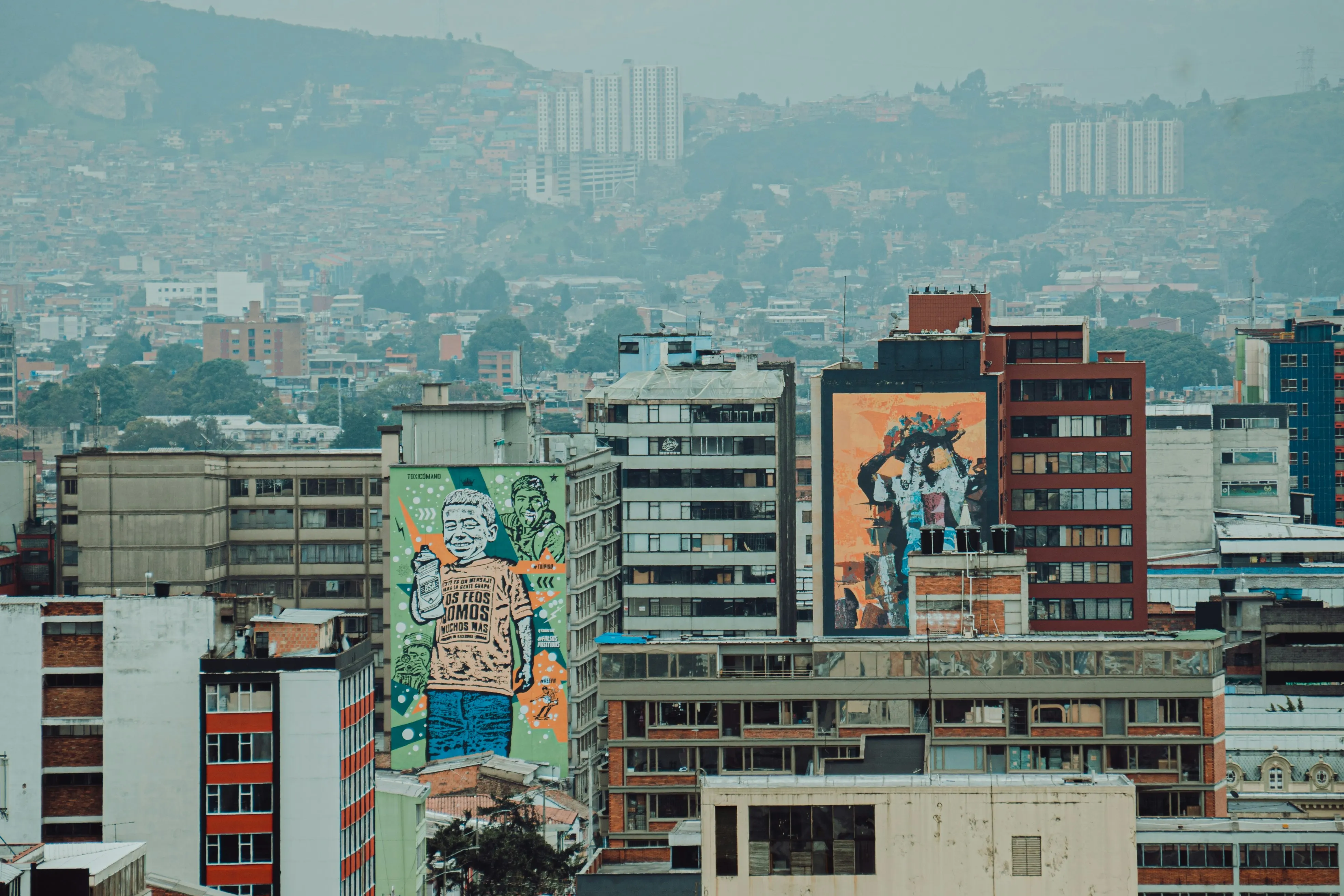 View of downtown Bogotá, Colombia.
Sovereignty and its counterweight.
The legal foundation of the Latin American position is permanent sovereignty over natural resources. The UN General Assembly formulated it in Resolution 1803 (XVII) of 14 December 1962, approved by 87 votes in favor, 2 against and 12 abstentions, and the two 1966 Covenants reaffirm it in their common article 1.⁷ The resolution itself establishes that this right must be exercised in the interest of national development and of the well-being of the People of the respective State. This is not diplomatic courtesy: it is the basis of the reforms that declare minerals strategic.
Mexico is the most visible case. On 20 April 2022 the reform to the Mining Law was published in the Diario Oficial, recognizing lithium as the nation’s patrimony, reserving its exploration and exploitation in favor of the people, preventing the granting of concessions and declaring areas with deposits as mining reserve zones. On 23 August 2022 a decree created the entity Litio para México (Litio Mx).⁸ It is worth being precise: under article 27 of the Constitution, subsoil minerals were already the property of the nation, so “nationalization” was a political label rather than a change of ownership. What changed was the exploitation regime, and some legal analyses warned that the design left private participation in certain activities open.
Chile chose another path. In April 2023 the National Lithium Strategy was presented, tasking Codelco with negotiating with the operators of the Salar de Atacama. In December 2023 Codelco and SQM agreed on a public-private partnership, with a majority state stake (50.01%), to operate the salt flat from 2025 to 2060.⁹ The idea of a national lithium company was left, according to some analysts, in question. Argentina, by contrast, attributes dominion over resources to the provinces, and that fragmentation weakens its negotiating position vis-à-vis global investors.
Sovereignty has a little-discussed counterweight, and it is in the very text of Resolution 1803: foreign investment agreements freely entered into by sovereign States must be carried out in good faith.⁷ To this is added the network of investment treaties with investor-State arbitration. A State that reserves a resource or changes the rules can be sued over an investor’s legitimate expectations. Sovereignty proclaimed in a constitution proves costly if it is not backed by a coherent contractual architecture. There is much discussion of how much lithium there is and very little of what clauses there are. Here the lesson of Sanahuja reappears:² the problems of globalization are not solved with a purely national approach, and require intervening in the design of the system in which one negotiates.
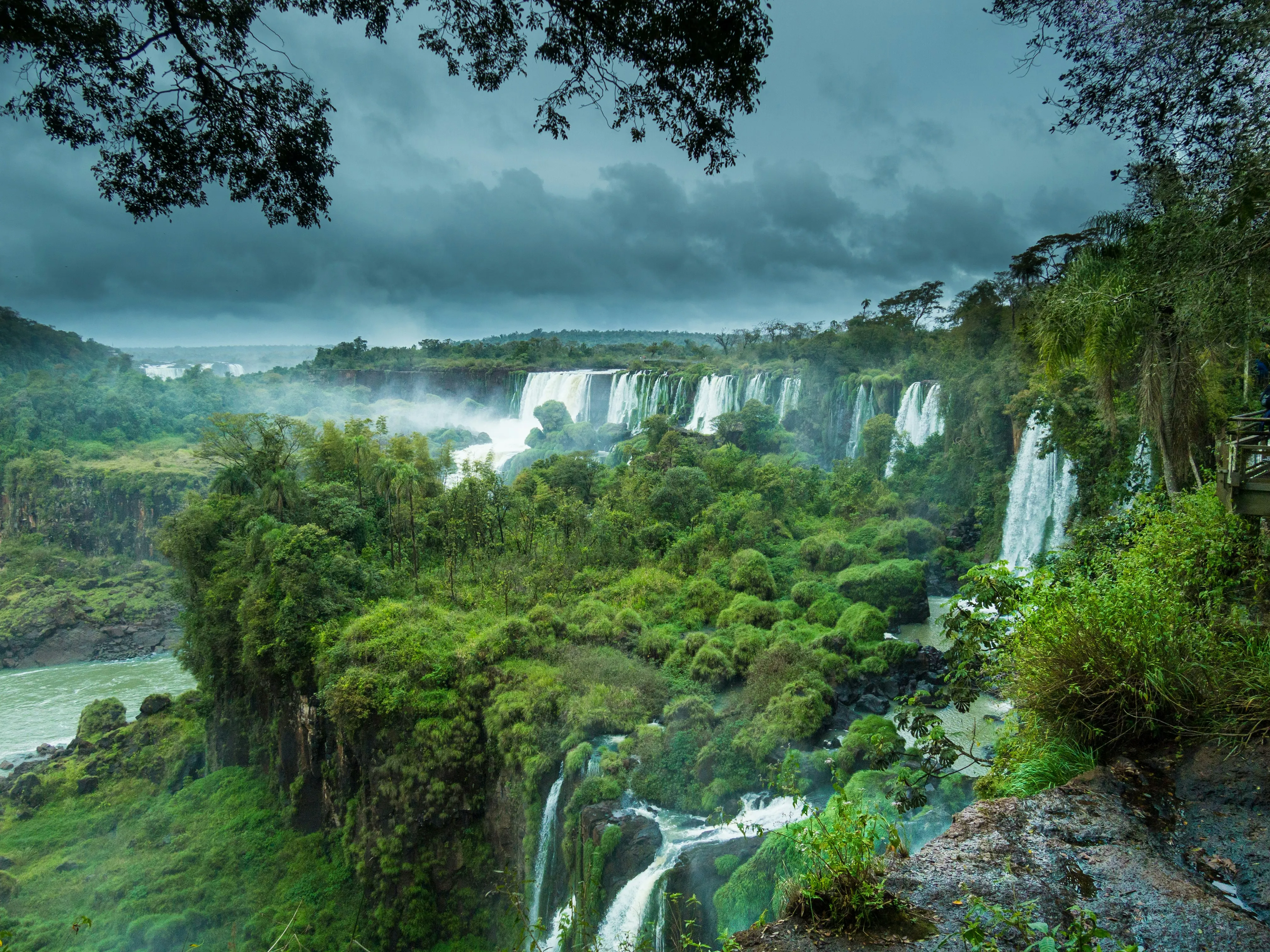 Iguazú Falls, Brazilian-Argentine border.
Water, consultation and peoples.
Lithium in brine is extracted in arid ecosystems where water is scarce and sustains indigenous and tribal communities. The human rights question is therefore the core of the legitimacy of any project, not an annex of social responsibility. The normative framework has three layers.
The first is ILO Convention 169, adopted on 27 June 1989 and in force in Mexico since its promulgation in the Diario Oficial on 24 January 1991.¹⁰ It applies to indigenous and tribal peoples, and its article 6 obliges governments to consult them through appropriate procedures whenever measures that may affect them directly are envisaged. The second is the Escazú Agreement, adopted on 4 March 2018 and in force since 22 April 2021, which obliges guaranteeing access to information, public participation and access to justice in environmental matters.¹¹ Mexico and Argentina deposited their ratifications on 22 January 2021 and completed the number necessary for its entry into force; Bolivia and Ecuador are also States Parties. The Congress of Peru, by contrast, decided not to ratify in October 2020.
The third layer, the most demanding, is the jurisprudence of the Inter-American Court of Human Rights, built in four steps.
The first is Saramaka v. Suriname (28 November 2007). The Court held that any development or investment plan within the traditional territory requires consultation, and that when the project may have a profound impact on the people’s property with respect to a large part of their territory, the State must additionally obtain their free, prior and informed consent.¹² The case concerned a tribal people, not originating from the region where it lives, and the Court applied to it the jurisprudence developed for indigenous peoples. The consequence for extractive megaprojects is direct: beyond a certain threshold of impact, consultation is not enough.
The second is Sarayaku v. Ecuador (27 June 2012). The Court unanimously declared Ecuador responsible for violating the rights to consultation, to indigenous communal property and to cultural identity, by allowing a private oil company to explore in Kichwa territory since the late 1990s without prior consultation.¹³ It ordered consulting the people in a prior, adequate and effective manner and regulating consultation in domestic law. The case also teaches a limit: the people’s representatives denounced in 2023 that Ecuador had concessioned more than 91% of its territory without consultation. This is an assertion by the representative party, not a finding of the Court, but it illustrates that a favorable judgment is not equivalent to compliance.
The third is Lhaka Honhat v. Argentina (judgment of 6 February 2020), the most relevant for those exploiting salt flats. For the first time in a contentious case, the Court analyzed autonomously the rights to a healthy environment, to adequate food, to water and to cultural identity on the basis of article 26 of the American Convention.¹⁴ Water ceases to be a project input and becomes a right enforceable by communities. The Court also considered that Argentina did not guarantee prior consultation with respect to an infrastructure project in the territory.
The fourth is Advisory Opinion OC-32/25 on the climate emergency, adopted on 29 May 2025 and notified on 3 July, at the request of Chile and Colombia, two States with direct mining interests.¹⁵ The Court recognized the human right to a healthy climate, requires enhanced due diligence in prevention and set parameters for access to information, participation and justice in climate matters. The electrification that justifies lithium demand does not exempt States from these obligations. It reinforces them.
The Chinese discourse of “mutual benefit” must be examined with the same rigor as that of any power.⁶ Cooperation between States does not replace consultation with communities, and state sovereignty does not exhaust the rights-holding of peoples. The strategic implication is counterintuitive: respecting these standards does not slow investment, it stabilizes it. Projects without a social license are the ones that get paralyzed, litigated and become politically costly.
 El Corchito Ecological Reserve, Progreso, Yuc., Mexico.
The risk of military custody.
Rut Diamint documents a regional phenomenon: the armed forces return to public security tasks without their doctrines or training changing.¹⁶ She calls them “multifunction militaries.” She cites Pion Berlin in noting that, without modifying those doctrines, they can be dedicated indistinctly to pursuing organized crime, defending the extraction of natural resources or peace missions. The author warns that this accumulation of functions erodes civilian control and democratic quality, and that resorting to the military usually substitutes for police reform. She uses the case of Mexico as an example of the consequences for human rights and for institutional order.
Diamint does not speak of lithium, and the link to mining is mine. But the inference is sound in light of Kok:¹ territories with metal have been secured by force since the 17th century. If the strategic subsoil is managed with a logic of security rather than of rights, those who live above it will be the first to pay the cost. That logic also contradicts the idea of expanded security that Mexican diplomacy defended at the Tlatelolco Assembly of 1994, according to Pinto Mazal,³ where continental security included economic and social problems.
The legal framework as a strategic asset.
An industrial buyer does not negotiate with a cultural heritage. It negotiates with institutions. Francisco Olguín Uribe documents that political parties entered Latin American constitutional law in stages, from Uruguay in 1934, and that today the 18 democracies that hold regular elections regulate them by law.¹⁷ They regulate them in matters such as public financing, free access to the media and oversight bodies. It is an elaborate legal framework, with European influences and a trajectory of its own.
The same text marks the limits, and they are the ones that matter to this argument. Indigenous peoples represent on average about 8% of the regional population and more than 40% in Bolivia and Guatemala, but no country has adopted quotas for them. Only some have timid provisions. Olguín also acknowledges a gap between the norm and practice and low levels of citizen trust in parties. His conclusion is that the remedy is not to suppress them, but to strengthen them.
For this article, that means that legal predictability and political inclusion are part of what the region offers the world. A State with weak institutions negotiates its resources worse, and a lost arbitration or a poorly managed social conflict costs more than any royalty.
Institutions do not sustain themselves. The standards of consultation, transparency and civilian control that this essay calls for require actors who monitor them, document them and translate them into public decisions. Sanahuja’s lesson² on fragmented negotiations also applies at this level: a region with communities, universities and organizations capable of reading contracts, measuring impacts and demanding information negotiates better than one that delegates everything to its governments.
How to present Latin America to Asia.
From the foregoing follows a five-point positioning proposal:
- Present jurisdictions, not culture. Speak of mining regimes, constitutional frameworks and institutional capacity.
- Make the indigenous and territorial dimension visible. The map of lithium is also the map of indigenous peoples, and recognizing it anticipates an agenda that serious investors must address.
- Remember that the link with Asia predates the republics. American silver circulated toward Asia through transpacific trade, which allows speaking of continuity without going through Madrid.
- Offer added value and not only mineral. This avoids repeating the poorly diversified offer that Sanahuja² points to as part of the historical problem.
- Speak with a coordinated voice. The countries that negotiated separately in the 1990s obtained uneven results, and a minimal coordination of standards and contractual conditions increases power vis-à-vis concentrated buyers.
Conclusion.
Lithium is not the solution to Latin American development, just as the Washington Consensus was not. What decides whether the region is a setting or an actor is not the subsoil, but the law and politics that govern it. Without sovereignty backed by solid contracts, without human rights as a condition of legitimacy, without civilian control over the custody of territories and without a common strategy of added value, the region will live another cycle of hope followed by another crisis. The difference with the 17th century is that today the legal instruments exist to avoid it. What is missing is the political will to use them.
In Part I, Danna Mena analyzed how the analytical distortion about Latin America conditions its relationship with Asia and the United States, tracing the historical continuity of extractivism and the forces that today drive interest in its critical minerals.
Notes
- UN General Assembly, Resolution 1803 (XVII), “Permanent sovereignty over natural resources”, 14 December 1962.
- Mexico, Decree reforming and adding to the Mining Law on lithium matters, Diario Oficial de la Federación, 20 April 2022; Decree creating Litio para México, 23 August 2022.
- Chile, National Lithium Strategy, April 2023; Codelco-SQM agreement, December 2023.
- ILO, Convention 169 on indigenous and tribal peoples in independent countries, 27 June 1989.
- Regional Agreement on Access to Information, Public Participation and Access to Justice in Environmental Matters in Latin America and the Caribbean (Escazú Agreement), 4 March 2018.
- IACtHR, Case of the Saramaka People v. Suriname, Judgment of 28 November 2007.
- IACtHR, Case of the Kichwa Indigenous People of Sarayaku v. Ecuador, Judgment of 27 June 2012.
- IACtHR, Case of the Indigenous Communities Members of the Lhaka Honhat Association (Our Land) v. Argentina, Judgment of 6 February 2020, Series C No. 400.
- IACtHR, Advisory Opinion OC-32/25, Climate emergency and human rights, 29 May 2025.
- Rut Diamint, “América Latina remilitarizada”, in Seguridad y asuntos internacionales (2020), pp. 603-611.
- Francisco Olguín Uribe, “Los partidos políticos en América Latina: evolución de su marco jurídico”, Revista Mexicana de Política Exterior 79-80 (2007).
Danna Mena es magíster en Derecho Constitucional y Derechos Humanos, con formación como abogada e internacionalista. Desde 2019 representa a colectivos en foros nacionales e internacionales, con trayectoria de colaboración junto a organizaciones como USAID, FMCN y Sureste Sostenible. Su trabajo analiza la justicia climática, los derechos humanos y la geopolítica. Es cofundadora de Hackers por Nuestro Futuro A.C. y actualmente es investigadora asociada en Open Andes.
Nota editorial
Este trabajo representa exclusivamente las opiniones del autor o autores. Open Andes es un think tank y editorial independiente, y no adopta posturas institucionales sobre asuntos de política pública.
SHARE KNOWLEDGE