 OPEN ANDES
Latin America between Asia and the United States in the Era of Critical Minerals (1/2)
Latin America’s subsoil has consolidated as a critical vector of power in the geoeconomic dispute between Beijing and Washington. In this two-part series published by Open Andes, Danna Mena N. dismantles the mirage of Hispanic cultural heritage to examine the region from its structural position: strategic geology, constitutional frameworks, and territorial sovereignty.
The first installment analyzes how analytical distortion about Latin America conditions its relationship with Asia and the United States, tracing the historical continuity of extractivism and the forces that today drive interest in its critical minerals. The second installment examines the real governance of the subsoil: the limits of declared sovereignty vis-à-vis international arbitration, the enforceability of community rights under the Inter-American standard, and the risk of delegating custody of the territory to the logic of military security.
The Editors.
For much of Asian public opinion, Latin America is an extension of the Iberian Peninsula: the same language, the same religion, the same imperial past. The image is comfortable and it has a cost. Whoever sees linguistic heritage sees culture, tourism, and consumption. They do not see sovereign states with a strategic subsoil. The image decides what relationship is offered: cultural exchange, or supply agreements and industrial cooperation between equals.
My thesis is that the region must stop presenting itself by its colonial origin and present itself by its structural position. That position has three planes. It is geology: the subsoil on which global electrification depends. It is legal order: constitutions that declare the nation’s original ownership of its resources. And it is plurality: Indigenous and tribal peoples with rights of their own. Spain does not figure in any of the three.
The frontier as a negotiating arena.
History dismantles the narrative of Iberian heritage. Gloria Kok studies the frontiers of Meridional America in the seventeenth century, where the Mbayá-Guaicurú and Payaguá groups moved between the crowns of Spain and Portugal. The gold of Cuiabá and silver drew both powers toward the rivers of Paraguay and the Pantanal. Kok shows that these peoples did not passively receive European culture. They exploited the ambiguities of the Iberian frontiers, negotiated alliances, and traded captives, horses, and colonial goods with one power and the other. They were political actors playing with two rival empires. From that process new identities emerged, what Jonathan Hill calls ethnogenesis.¹
The same source shows the reverse side. The crowns responded with presidios, forts, and punitive expeditions, some with orders not to spare the defeated. Territory with metal was secured by military force. It is a direct antecedent of the current question: who guards the subsoil and under what rules.
The link with Asia is even older. American silver fed the economy of Imperial China through transpacific trade. Spain was in that chain an intermediary and an extractor, not Asia’s interlocutor. That intermediation disappeared. Today Latin American states negotiate directly with Beijing, Seoul, Tokyo, and Washington, and presenting the region as the “Hispanic world” erases the true protagonist.
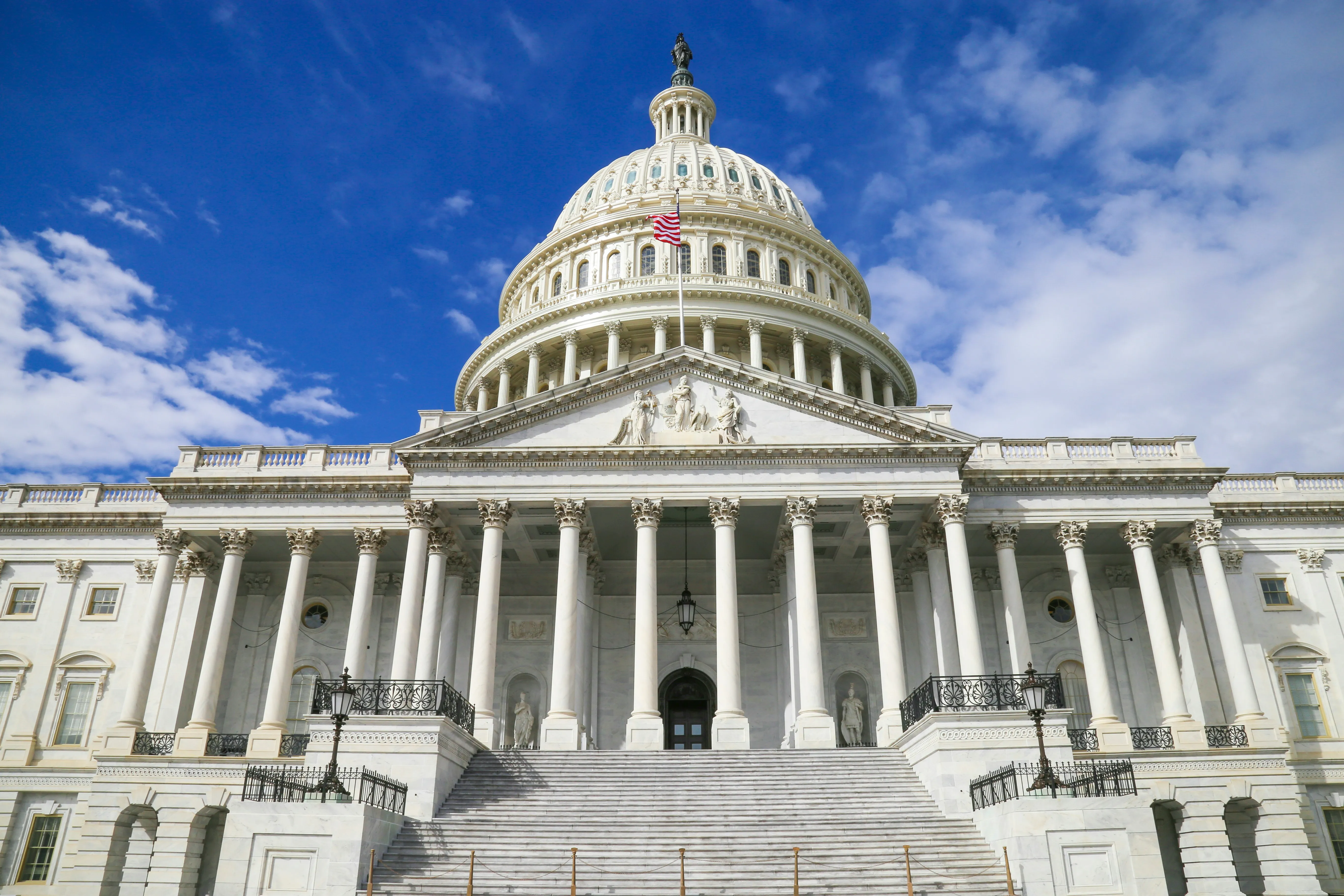 United States Capitol
From the Washington Consensus to the lithium mirage.
José Antonio Sanahuja analyzed in 2003 the region’s relationship with the United States and the European Union. He picks up Ricardo Hausmann’s phrase, then chief economist at the IDB: a “crisis of hope.” The Washington Consensus reforms achieved macroeconomic stability and attracted capital, but social indicators barely improved and openness aggravated external vulnerability. Mexico was the first victim with the peso crisis, and instability later spread to Asia and South America. Sanahuja concludes that the problem was not only one of domestic policies. The international financial architecture had flaws that a national approach could not correct.²
His text records another asymmetry. Washington and Brussels preached openness while protecting their own agricultural sectors with subsidies, the 2002 Farm Bill and the Common Agricultural Policy. Sanahuja speaks of a “double standard.” He also shows a region caught between two powers competing for its market, with the FTAA on one side and the European association agreements with Mexico and Chile on the other, and with countries negotiating separately, each at its own pace. His final warning is that the region had to look to the future “on firmer foundations,” without the neoliberal mirage.
The protagonists change and the structure repeats. Two decades ago the promise was that opening the economy and exporting would bring development. Today the promise is that having lithium and copper will bring prosperity. Washington today conditions its industrial incentives on the origin of minerals while demanding access, and it is the same double standard with another input. Whoever ignores that antecedent will repeat the mirage.
From Mexican diplomacy, Jorge Pinto Mazal, then undersecretary of Foreign Affairs, describes in the mid-nineties the historical response. He presented sovereignty as Mexico’s most important bulwark in its foreign policy. He defended regional concertation through the Rio Group, the Group of Three, and Contadora to gain room for maneuver. And he upheld the principle of non-intervention, with the thesis that democracy cannot be imposed from outside. His text is the official voice of the Salinas government, with its optimism, and I used it as testimony of a doctrine, not as an evaluation of results. That doctrine, however, is the legal substrate on which lithium is today declared strategic.³
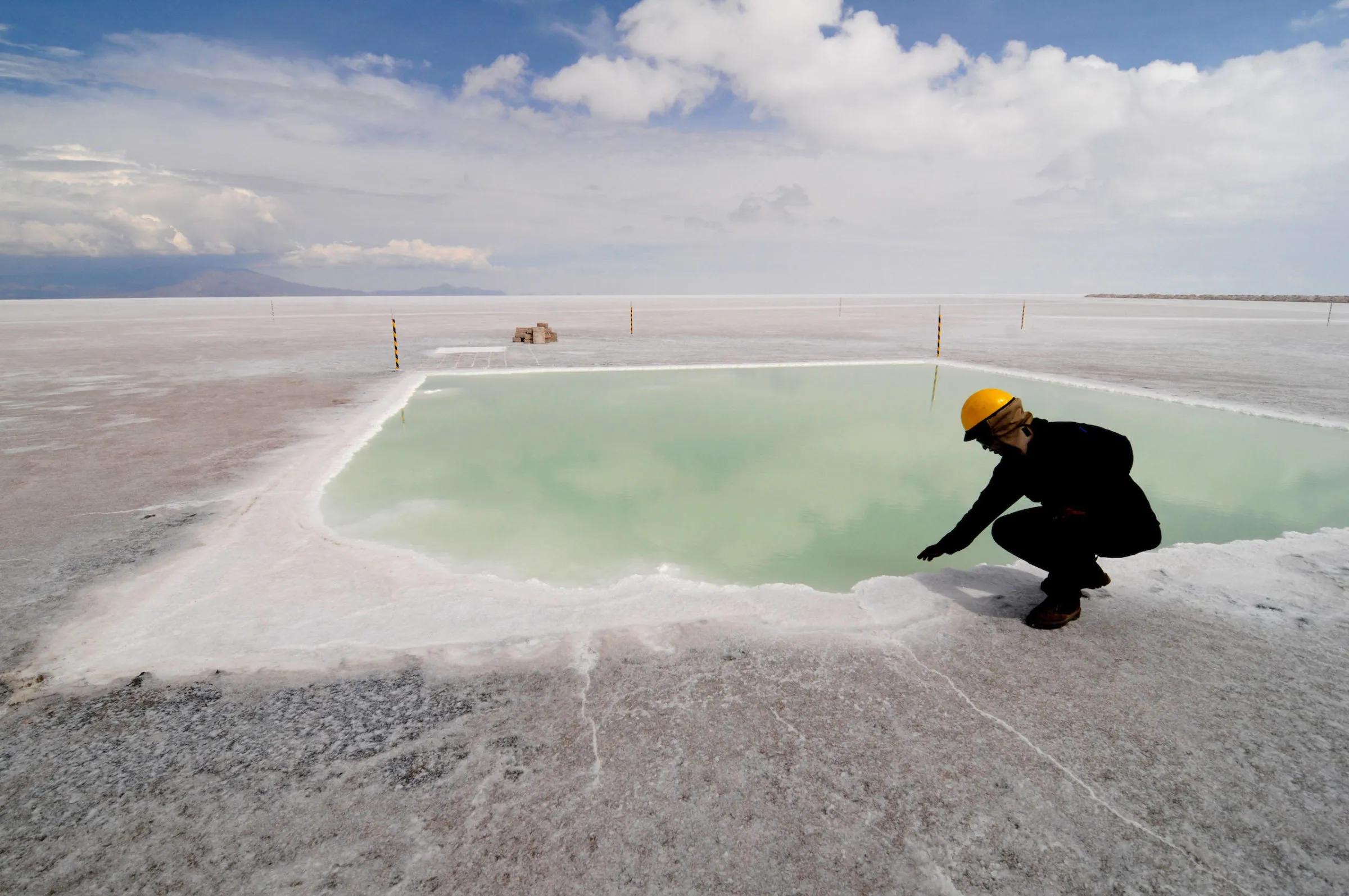 Salar de Uyuni in Bolivia, where lithium is extracted from brines beneath the salt crust. China is increasing its production of this key mineral for electric vehicle batteries.
Why Asia and the United States look at the subsoil.
Four long-term forces sustain current interest, and none depends on the week’s headline.
Geology. The lithium triangle between Argentina, Bolivia, and Chile concentrates between just over half and nearly two-thirds of the planet’s identified lithium resources. The figures vary because they depend on the distinction between resources and reserves and on revisions by the United States Geological Survey.⁴ With that caveat, identified resources stand at around 21 million tons in Bolivia, close to 20 in Argentina, and between 10 and 11 in Chile, while in economically exploitable reserves Chile stands out. The word “triangle” is misleading, because it suggests a homogeneous region: Chile and Argentina produce, and Bolivia, despite its endowment, has barely developed pilot projects. To this are added the copper of Chile and Peru, the iron and niobium of Brazil, and the silver and lithium potential of Mexico. The endowment is permanent. The capacity to exploit it is not.
Industrial concentration. The critical point is not only where the mineral is, but who refines it and turns it into batteries. China built over two decades a dominant position in those stages. Securing access upstream through financing, equity stakes, and long-term contracts is, for Asian economies, industrial security policy.
Asian insecurity. León-Manríquez, Tzili-Apango, and Cárdenas-Barajas describe a continent of enormous strategic density: nuclear powers and open territorial disputes in the South China Sea, the Korean peninsula, and Kashmir. They recall that more than a third of global trade transits the South China Sea, a potential point of conflict.⁵ Such a vulnerable space pushes its economies to diversify access to resources outside it. Mei Zhaorong formulated it in 2001 from Chinese diplomacy: independence, sovereignty, non-intervention, multipolarity, and a “new just economic order,” with a discourse of mutual benefit and common development aimed at developing countries.⁶ That discourse resonates in a region that has known the double standard.
The defensive logic of the United States. Washington perceives dependence on a chain controlled by its main competitor. It responds with industrial incentives conditioned on the origin of minerals and relocation toward countries considered reliable. It is the old hemispheric logic with new vocabulary. Mexico, with a border, a trade agreement, and Asian manufacturing capital, is the point where the two orbits touch. Chile and Peru look to the Pacific. The region is the crossroads of two rivals, and that is its greatest opportunity and its greatest risk.
In Part II, the contradictions between constitutional sovereignty and investment treaties, the jurisprudence of the Inter-American Court on territorial rights, the risk of military custody, and a five-point proposal for regional positioning will be analyzed.
Notes
- Gloria Kok, “Guerras, cautivos y metales: etnogénesis en las fronteras de la América Meridional en el siglo XVIII,” in Miradas comparativas sobre las fronteras en América Latina (2010).
- José Antonio Sanahuja, “América Latina, la cuestión agraria y las negociaciones comerciales con Estados Unidos y la Unión Europea: ¿crisis de esperanza o fin de un espejismo?”, Revista Mexicana de Política Exterior 69 (2003).
- Jorge Pinto Mazal, “Integración política y económica con América Latina”, Revista Mexicana de Política Exterior 44 (1994).
- United States Geological Survey (USGS), Mineral Commodity Summaries, relevant editions.
- José Luis León-Manríquez, Eduardo Tzili-Apango, and César Cárdenas-Barajas, “La seguridad internacional en Asia,” in Seguridad y asuntos internacionales (2020), pp. 926-938.
- Mei Zhaorong, “La situación internacional y la política exterior de China,” Revista Mexicana de Política Exterior 65 (2002).
Danna Mena es magíster en Derecho Constitucional y Derechos Humanos, con formación como abogada e internacionalista. Desde 2019 representa a colectivos en foros nacionales e internacionales, con trayectoria de colaboración junto a organizaciones como USAID, FMCN y Sureste Sostenible. Su trabajo analiza la justicia climática, los derechos humanos y la geopolítica. Es cofundadora de Hackers por Nuestro Futuro A.C. y actualmente es investigadora asociada en Open Andes.
Nota editorial
Este trabajo representa exclusivamente las opiniones del autor o autores. Open Andes es un think tank y editorial independiente, y no adopta posturas institucionales sobre asuntos de política pública.
SHARE KNOWLEDGE