 OPEN ANDES
From NYC Climate Week: The Structural Limits of the Climate Order
Currently, the planet is skirting the 1.5 °C threshold, having crossed it during 2024. According to UNEP 1, warming of 2.6 °C is expected by 2100 under current policies; and even in an optimistic scenario with drastic emission reductions, we would reach a peak warming of 1.8 °C. This outlook is far from the premise of Stockholm 2, which recognized human beings as the architects of environmental deterioration, giving rise to environmental diplomacy and laying the foundations for climate governance aimed at preventing dangerous warming relative to pre-industrial levels.
It is therefore worth asking: What milestones in the history of climate negotiations have brought us to this state? Are there structural flaws in the system, or is it solely due to a lack of political will on the part of the States Parties?
First, the Stockholm Conference, the beginning of formal environmental diplomacy and of the United Nations Environment Programme (UNEP), emerged within an international structure marked by the Cold War and by the political, economic, and normative centrality of the Western powers. However, this initiative, given the slight global warming of the time, steered nations toward a non-binding declaration and general recommendations, without specific and measurable objectives, with the aim of not hindering the economic growth of industrialized nations and of developing nations facing poverty rates. From its origin, therefore, the space of international environmental governance was not neutral, but was conditioned by a global power structure that would later be reproduced in the climate architecture.
In response, two milestones emerged: the creation of the United Nations Framework Convention on Climate Change 3, dividing nations between industrialized countries (Annex I) and developing countries, with a differentiation for some developed countries (Annex II). Likewise, the Kyoto Protocol 4 attempted to implement legally binding commitments through a top-down system for the parties of the first annex, initiating quantitative emission reduction targets.
(Note: Annex I groups industrialized countries with reduction commitments; Annex II identifies wealthy developed countries with an obligation to finance mitigation in the Global South. Non-Annex I countries—such as China, India, or Brazil—were left without binding obligations.)
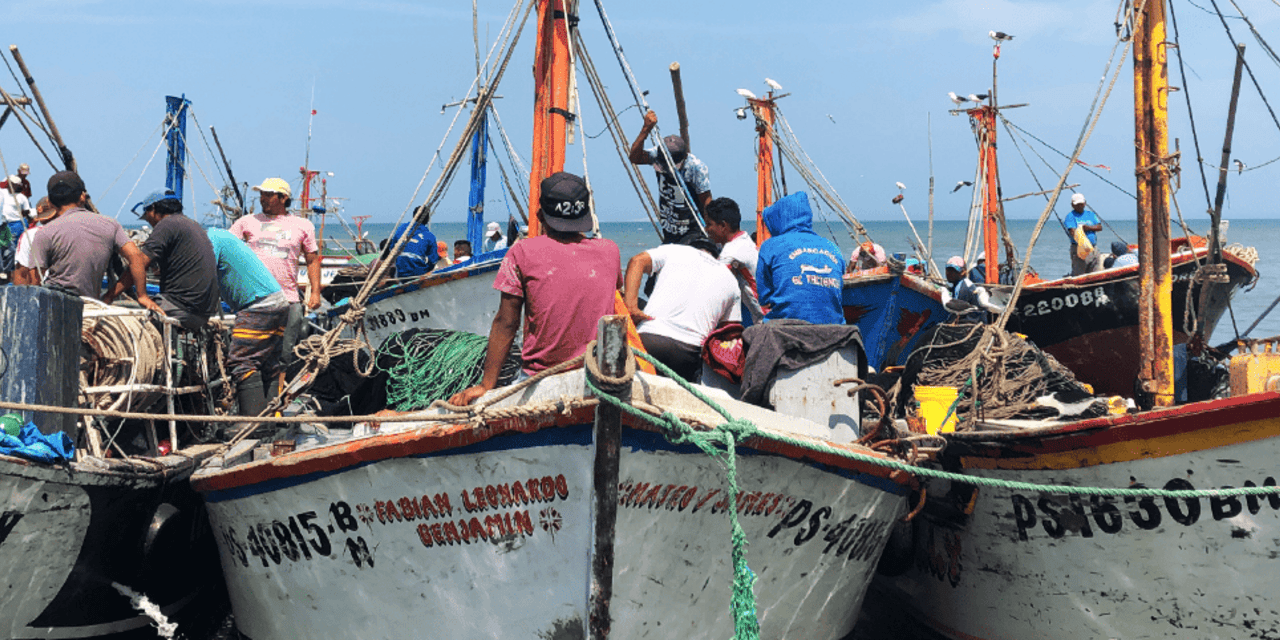
Despite this effort, these initiatives fell into two structural flaws. The first was dividing nations by incorporating geopolitical interests, and not solely by level of emissions and development. An example of this was the case of China and India, whose emissions would reach high levels but which, by remaining developing countries, were not incorporated into the Annex I obligations 5. This differentiation cannot be understood as a technical classification: it also reflected the power relations and the categories with which the international system organized the world between industrialized and developing countries. From a critical reading, this structure can be understood as part of the initial Westernization of the climate governance space, in which the Western powers retained a central position in defining responsibilities and rules, while the rest of the world was grouped under differentiated categories.
Following this case, the United States Senate did not ratify the Kyoto Protocol and would later justify this imbalance to avoid committing firmly to emission reductions. Another critical point was the demand for binding commitments of a vertical nature, in a cooperation system represented by horizontality. In this context, several Annex I States began to distance themselves from the Kyoto Protocol, considering that the distribution of obligations created an unbalanced playing field 5.
This structural weakness of the climate negotiation system was not an isolated case. During COP15 in Copenhagen 6, there was a closed-door meeting of a small group of leaders, comprising the United States, the countries of the BASIC bloc (China, India, Brazil, and South Africa), and a few guests invited by the Danish presidency, to unblock days of paralysis. This dynamic left out the delegations of Latin America, such as the ALBA bloc and other developing countries, as well as small islands and African nations. When the resulting text was presented in the plenary, it was accused of violating transparency and multilateral democracy, collapsing the summit and limiting the Conference to a note of record 7 5.
Faced with the collapse of Copenhagen, a new structure was proposed in the Paris Agreement8, establishing the mechanism of Nationally Determined Contributions (NDCs), which allows nations to create commitments adapted to their territories and capacities, as well as a monitoring and evaluation system. However, given the weakness of the Kyoto Protocol, these commitments depend on voluntary pledges without coercive mechanisms, generating a permanent emissions gap.
The case is aggravated even further when the possibility of civil society influence, through observer organizations and constituencies such as YOUNGO, is restricted to select spaces in side events for application and to internal negotiations that, in most cases, do not formally impact the final document. Even so, these organizations have played, in recent years, an active role in representing vulnerable victims, technical professionalization in multilateral corridors, and critical protest against the ineffectiveness of negotiations 7 9.
Little Island, floating park on the Hudson River, New York. Photo: Yuriy T / iStockphoto / Getty Images.
In conclusion, the history of climate negotiations does not represent merely a succession of failures, but a process of institutional learning through which States have attempted to adapt and build new forms of cooperation in the face of a changing global problem. From Stockholm to Paris, each stage incorporated mechanisms and commitments to overcome the limitations of the previous one. Although today we find ourselves skirting the 1.5 °C threshold, the work built session after session has made it possible to avoid an international architecture devoid of commitments and potentially worse scenarios. The current challenge consists not only in generating new agreements, but in overcoming the structural limitations of a system that has learned to cooperate, but does not yet do so with the speed, scope, and equity that the climate crisis demands.
Mauricio Aaron Bravo Melendez es politólogo por la Universidad Antonio Ruiz de Montoya (Perú). Miembro del Policy Team de YOUNGO, el constituency oficial de juventud ante la UNFCCC, donde co-diseña documentos de política y materiales técnicos para los procesos de negociación climática. Su trabajo se centra en gobernanza climática, financiamiento climático y participación juvenil en espacios multilaterales.
Bibliografía
- UNEP. 2026. Navigating the 1.5°C Overshoot: Spotlight Report on Climate Action, Decarbonization and Resilience. Nairobi: United Nations Environment Programme.
- UN (United Nations). 1972. Report of the United Nations Conference on the Human Environment. A/CONF.48/14/Rev.1. Stockholm: United Nations.
- UNFCCC. 1992. United Nations Framework Convention on Climate Change. FCCC/INFORMAL/84. New York: United Nations.
- UNFCCC. 1997. Kyoto Protocol to the United Nations Framework Convention on Climate Change. Kyoto: United Nations.
- Carraro, Carlo, y Emanuele Massetti. 2010. "Beyond Copenhagen: A Realistic Climate Policy in a Fragmented World." Nota di Lavoro 136.2010. Milan: Fondazione Eni Enrico Mattei.
- UNFCCC. 2009. Draft Decision -/CP.15: Proposal by the President (Copenhagen Accord). FCCC/CP/2009/L.7. Copenhagen: United Nations.
- Schroeder, Heike, y Heather Lovell. 2012. "The Role of Non-Nation-State Actors and Side Events in the International Climate Negotiations." Climate Policy 12 (1): 23–37.
- UNFCCC. 2015. Paris Agreement. FCCC/CP/2015/L.9/Rev.1. Paris: United Nations.
- Marquardt, Jens, Eva Lövbrand, y Frida Buhre. 2024. "The Politics of Youth Representation at Climate Change Conferences: Who Speaks, Who Is Spoken Of, and Who Listens?" Global Environmental Politics 24 (2): 19–45.
Nota editorial
Este trabajo representa exclusivamente las opiniones del autor o autores. Open Andes es un think tank y editorial independiente, y no adopta posturas institucionales sobre asuntos de política pública.
SHARE KNOWLEDGE