 OPEN ANDES
What Latin America's Agricultural Fortress Conceals
Soil and climate conditions favor soy planting. It is almost impossible to imagine the Argentine Mesopotamia without it. Even less imaginable would be to conceive of it as it presents itself today: a seemingly inexhaustible field with a soy density that appears unnatural. It well might be: high-density monocultures do not occur in nature. A soy field is an open-air bioreactor where production takes place under stress conditions. Soy does not live in harmony with the environment. The same is true of an intensive corn plantation, a strawberry greenhouse, and so on. Nature is a term that has fallen into disuse.
In the case of soy cultivation, Latin America does not export soy but rather energy and chemical synthesis. Soy plants absorb nitrogen, phosphates, and potassium (NPK) and transform them into soy. Nitrogen fertilizer (urea or ammonium nitrate, for example) is a crystal that comes from Siberian gas. That is why Latin American ports (Santos in Brazil, Valparaíso, etc.) are visited by tankers from Uralchem or PhosAgro.
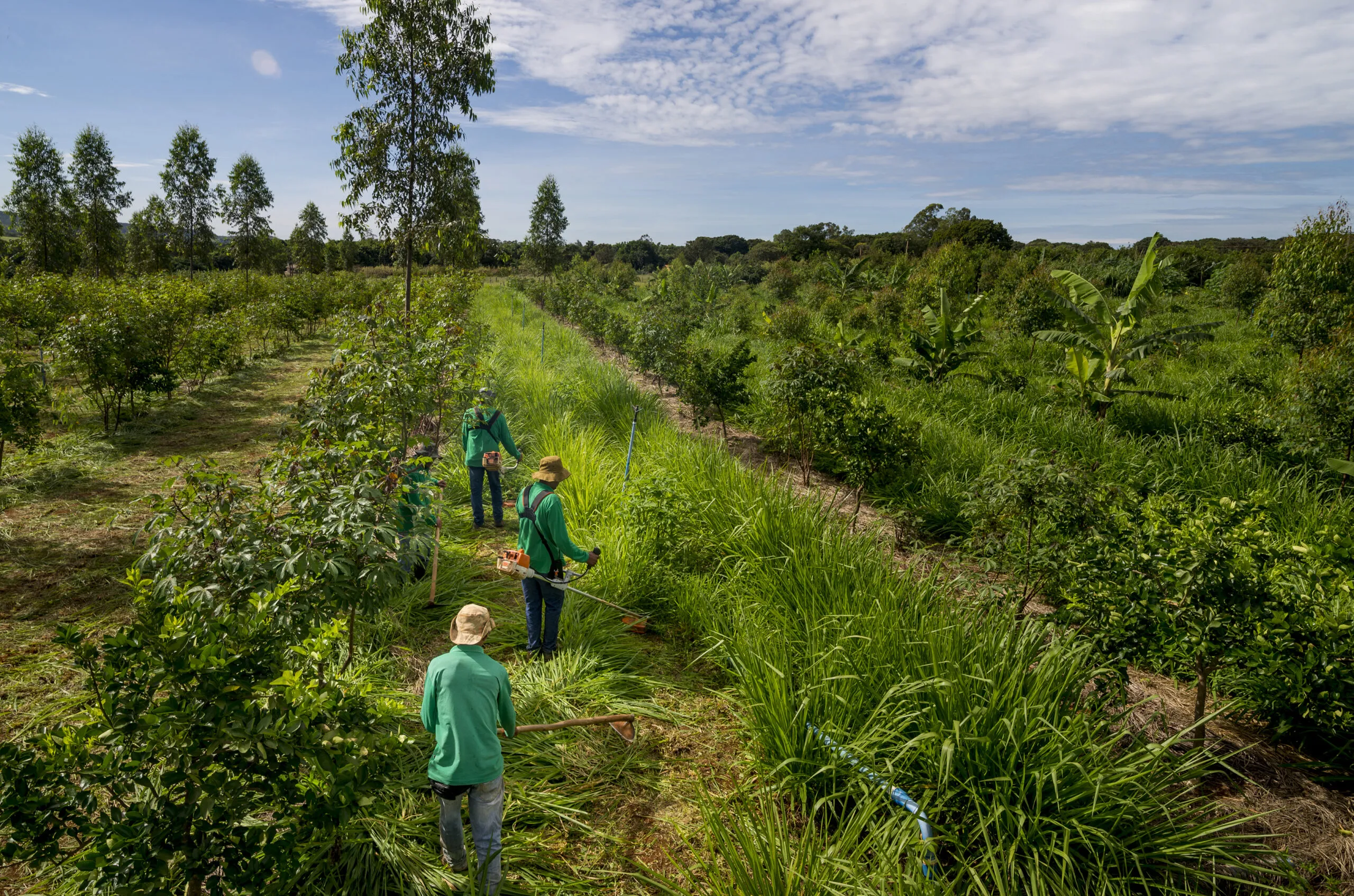
Brazilian field. © Climate Policy Initiative.
These conglomerates distribute such nitrogen fertilizers on a massive scale. The crystal is manufactured from natural gas (the source of hydrogen) under conditions of extreme pressure and temperature. It is called the Haber-Bosch process. In the atmosphere, nitrogen (N2) forms a very stable molecule that has a triple bond, which must be broken. To achieve this, pressures of 250 atmospheres and temperatures above 400°C are used, among other tricks with iron catalysts or complex oxides. Soy is a bioreactor in which nitrogen is transformed into an amino acid under conditions of physiological stress for the plant. Haber-Bosch also occurs under conditions of extreme stress for nitrogen, hydrogen, and energy. Latin America does not have this type of thermodynamics and, as a result, imports it disguised as crystal. In other words, it imports energy and technology. Soy fields are a technological achievement of Russia (and other countries).
Around 80-85% of the fertilizer Brazil uses is imported. Coffee, potatoes, soy, corn, etc. cannot be produced without them. Russia is the main supplier with a share of around 27% of Brazil’s import matrix (despite this high figure, its importance is lower than three years ago).
There are other products that could be mentioned. One example is lithium. Rosatom, the Russian state corporation, signed an agreement in June 2023 with Yacimientos de Litio Bolivianos (YLB), a Bolivian state company, for more than 300 million dollars for the exploitation of lithium from the Salar de Pastos Grandes located in the Potosí department. The project involves the construction of a plant with an annual production capacity of 25,000 tons of lithium carbonate. The project is in the construction phase and has not yet entered commercial production. Rosatom also signed a second agreement to extract lithium from the Salar de Uyuni. This plant has a projected annual production capacity of 14,000 tons and was supposed to begin operating in the second half of 2025, although there are no reports that it has done so. It is important to note that both projects use Direct Lithium Extraction (DLE) technology. This lithium extraction method requires continuous injections of water, energy, and chemical reagents to separate ionic species from the salar brines. Russia does not produce enough lithium to meet domestic demand, much less to meet global demand. Its weakness in Latin America compensates for its strength elsewhere. The thermodynamic costs are paid by Bolivia.
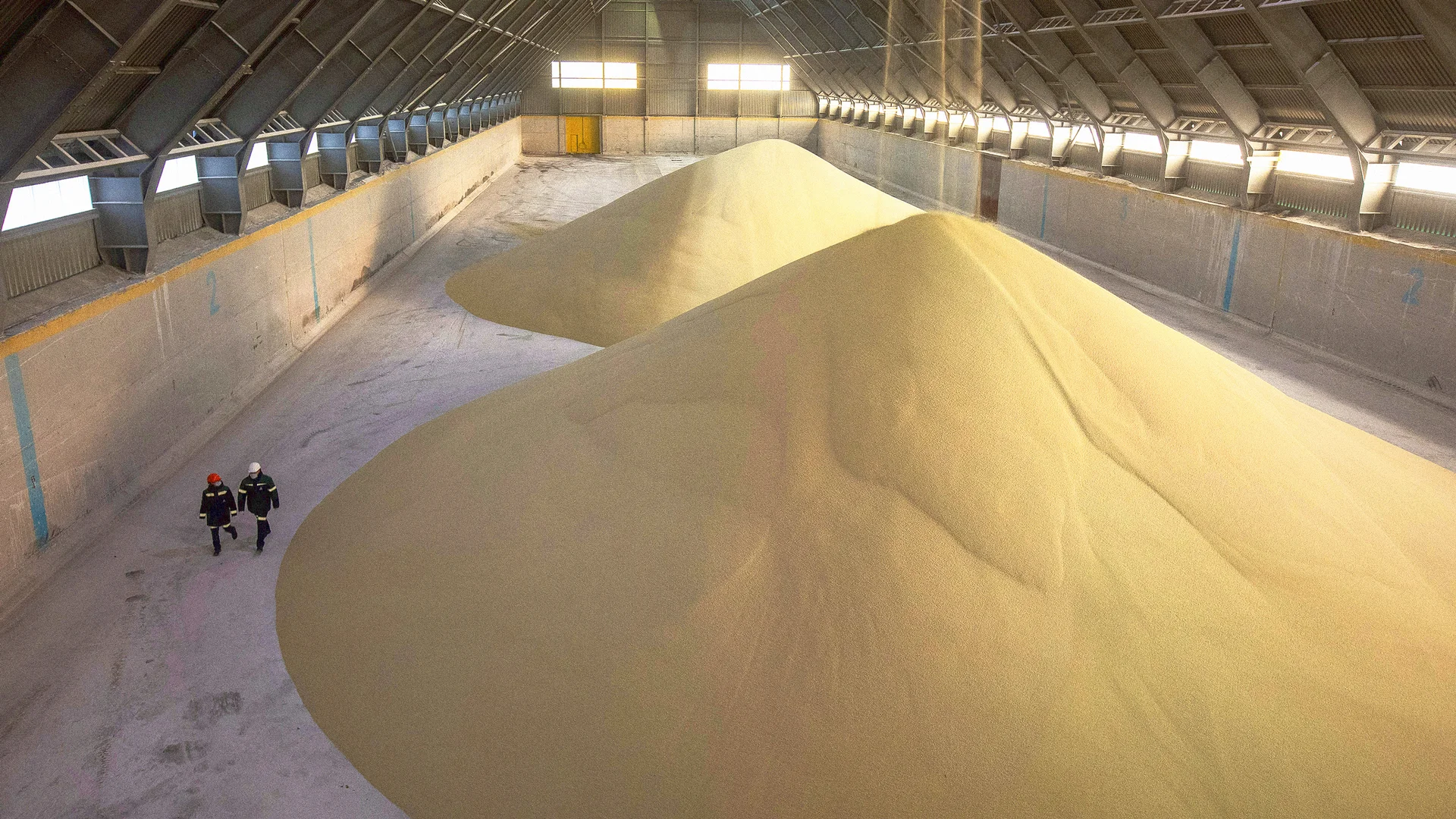
Phosphate fertilizer granules in a warehouse in Cherepovets, Russia. [Photo: Andrey Rudakov]
Overall, Russia is struggling to become a leader in cutting-edge technologies (nanotechnology for semiconductors is the clearest example), but it does not lag behind in metallurgy or materials science, an achievement dating back to the Soviet Union. Brazil controls 98% of the world’s active niobium reserves, but has little capacity to synthesize it into value-added technological applications. With the sanctions resulting from the war in Ukraine, Brazilian ferroniobium has flowed to Russia through intermediaries in Turkey, the Netherlands, and other re-export hubs, circumventing sanctions restrictions. The mineral is processed in Russian and Eurasian facilities for strategic applications, while other flows—Chilean copper, tantalum, and other inputs—circulate through the BRICS architecture.
This pattern repeats itself systematically. Latin America exports raw material under extreme thermodynamic stress, while the Kola apatite deposits (phosphates) or the potassium mines in the Urals feed the world’s technological heart. Nature cannot compete with molecules synthesized under pressure and energy even when there is an abundance of niobium, copper, lithium, potassium, phosphates, tantalum, etc., in Latin America; the capacity to control atoms lies elsewhere. Trade agreements mitigate this gap but will never compensate for it. Global trade in its essence pulses with energy.
Dina Fazlizhanova es doctora en ciencias por la Skoltech y física graduada con honores de la Universidad Estatal de Moscú (MSU). Ha publicado en Scientific Reports y colaborado con institutos de investigación internacionales. Aporta una perspectiva única respecto a las cadenas de suministro global, recursos estratégicos y dependencias tecnológicas.
Nota editorial
Este trabajo representa exclusivamente las opiniones del autor o autores. Open Andes es un think tank y editorial independiente, y no adopta posturas institucionales sobre asuntos de política pública.
SHARE KNOWLEDGE