 OPEN ANDES
Data centers in LatAm and the Peruvian case
Every time we use some form of artificial intelligence or scroll through the Internet, we generate data that must be stored and processed somewhere, and today that somewhere matters. Data centers have ceased to be secondary actors with large technological facilities and are now part of the infrastructure that enables States to manage information, protect sensitive data, and make decisions. That is why we must understand that, in a world where artificial intelligence acquires ever greater economic, geopolitical, and strategic weight, controlling that infrastructure means having greater capacity to decide and influence at the global level.
And although it may not seem so, Latin America plays a genuinely strategic role in this new dispute, but with a simple singularity. While the region consumes a significant share of these technologies, it still depends on foreign infrastructures and companies to sustain them. For this reason, the Peruvian case exposes this contradiction and shows that although the country has developed policies and regulations to advance its digital transformation, it still faces a particular dilemma: can a State speak of digital autonomy even though it does not possess the infrastructure necessary to sustain it?
The crisis of the international legal-political framework in recent years has weakened international trade relations and diplomacy; what is positioned today as a resource for understanding is intimidation and the use of force. In this way, strategic assets such as hydrocarbons, minerals, and supply chains are no longer mere substantive elements of the international market but critical variables of national security. This is how the nations of the world understand it today, and accordingly they establish their foreign policy.
In the same way, military, economic, and political infrastructure takes on a key role in public management and security; moreover, there is a type of variable with unique characteristics that intersects and enhances all the aforementioned assets, determining the State’s decision-making capacity vis-à-vis international competitors: digital infrastructure and the entire communicational fabric that is the nervous system of the most developed nations, where processing capacity, autonomy, and speed of response are key in strategic decisions. And digital infrastructure, represented in data centers, is the existential support of Artificial Intelligence (AI), protagonist of the present and the future, but this is not a fruit that falls by itself from the trees, as if by commodity fetishism, but rather, as Crawford points out:
”(…) it depends on manufacturing, transport, and physical labor; on data centers and submarine cables that trace lines between continents; on mobile devices and their raw components; on the transmission signals that course through the skies; on the data sets collected from the Internet, and on the continuous cycles of computers. All of this has a cost.”1
That is to say, the perception in our region of being active and beneficial participants in cutting-edge technology and AIs in their various applications of daily, economic, and political life is deceptive. For the most part we are simple consumers of services and we facilitate the training of their code with our queries and activity, providing valuable data that translate into commercial and foreign strategic security patterns. But for those who hold title to digital infrastructure and its supply chain, it is indeed a strategic and beneficial asset that increases the capacity of their States to make decisions, coordinate public policies, oversee markets, and safeguard strategic interests, as Crawford would say: “a certificate of power.”2

In our region there are many unfulfilled promises, one of them: the industrialization of our economy. It was a truncated project despite the good will of governments that sought economic and political sovereignty through planning and state enterprises. But the competitiveness of the international market and internal conspiracies closed that chapter, reaffirmed with the rise of neoliberalism in the 1990s. Today, more than forty years later, the region sustains itself on the export of raw materials and the growing services sector.3 We missed the industrialization train, but now, Latin America is a space where external interests and internal capacities converge, and we are presented with the opportunity to make efficient use of new technologies, capable of remedying the errors of the past.
Our region is experiencing a growing period of investment in installed capacity in the telecommunications sector, where data center infrastructure stands out; for example, Brazil has hyperscale data centers that are facilities the size of several football stadiums, Chile is positioning itself as the Pacific technological hub in Cloud connectivity, that is, it is achieving a unified infrastructure of public and private clouds, with high standards of security and efficiency. Uruguay, through the state-owned Antel, announced the construction of a duplication data center specialized in artificial intelligence, with access to submarine cables and serving as a base for sensitive information, government management and security. In Peru we have to date with data centers concentrated in the corporate and business sector but with no impact on the public sector or digital governance.
However, tensions between the public and private sectors around data centers and AI technology are beginning to become more frequent. In 2018 the European Union regularized the sector with a Data Protection Regulation and conditions on international data transfer; China also exercises tight control over its public cyberspace and also over the private sector.4 Likewise, problems of dependency arise with respect to AI systems such as Palantir, which in Britain provides optimization services to the National Health Service, and criticisms emerge regarding data control and possible blockages for political reasons; to overcome this, it is suggested to grant incentives to local alternatives so that they can develop, as is the case of Germany, which replaced the use of Microsoft Teams with an application of national origin.5
The aim is to seek responsible regulation of the market for private AI services, relating to data centers and connectivity in general, since the advantage of private actors is their flexibility and speed in implementing their services, but at the same time, the vulnerability of data and strategic assets, to the detriment of users. Our region, if it sets out to do so, has the geographic potential to sustain digital infrastructure and be attractive for investment; the question is that the State has strategic sovereignty over its own digital infrastructure and, on the other hand, regulates and oversees private data centers in accordance with the principles of free competition in harmony with national interests, because as Caicedo mentions:
”(…) in the European context a trend toward regulatory densification and the formalization of legal obligations is observed, while in the Latin American sphere a more flexible but also more fragmented approach predominates (…)“6
it is necessary to standardize our regulatory ecosystem.
The data centers of the Peruvian State in general are basic and respond to administrative storage tasks and ordinary processes in a mixed network of own servers (CPU) and external cloud services. It is the National Digital Government Platform that serves as a hybrid scheme between institutions with physical servers and storage in commercial clouds (Huawei Cloud, Amazon Web Services, etc.). And with regard to cybersecurity, it is the National Digital Security Center (CNSD) that monitors and coordinates responses to cyberattacks; for this, there are the Response Teams that intervene in risk situations in connection with the CNSD, and at the governance level we have the Secretariat of Government and Digital Transformation, soon to be strengthened with the announced National Digital Authority.
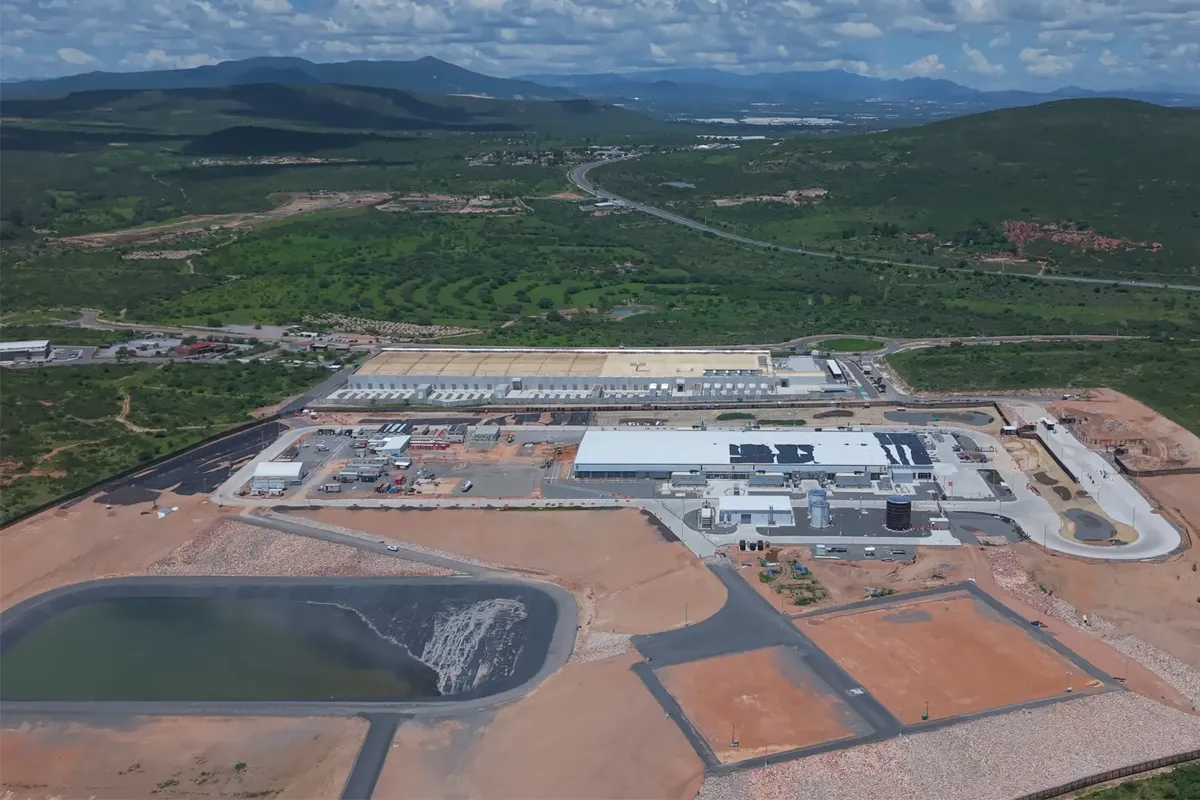
Data Center in Mexico © Thomson Reuters Foundation
However, there is a deficiency in digital security evidenced in the cases of recent years with the extraction of information from the PNP, citizen service platforms, the Guacamayaleaks case among others that show the vulnerability of state data and platforms, exposing sensitive information and endangering critical national assets. And in the case of public management, the slowness of procedures, the duplication of functions, deficient budget execution, and the fragmentation of functions and competencies without technical capacity persist, which lately has sought to be remedied through policies and regulations that seek to streamline procedures through digitalization and the modernization of the State. Such as the recent proposal of the National Digital Authority that, in addition to simplifying procedures and digitalizing the identity of citizens for access to services, seeks the prized articulation of the functions of the State.
It is true, we have the problem of not having a national supply chain (inputs, Nvidia microchips, technical personnel, cooling and maintenance technology) capable of sustaining a hyperscale data center; the major challenge also arises of guaranteeing constant electrical flow when in our country we depend on hydroelectric and thermal plants that, in a dry season period such as in 2023, had to resort to diesel, that is, we do not have a reliable energy ecosystem; we can add the environmental and social variables that, without sustainable management, become growing obstacles. The mere inclusion of digital infrastructure and sectoral regulations is not enough to improve governance.7
The regulatory character of the State does not limit it from incorporating its own material capacities when strategic interests are at stake. Even more so when the world is in a transition of the international order and the nature of the State is once again in question. But in our country and part of Latin America, beyond the debate on the essence of the State, it is the problem of its own functioning and effectiveness that are largely deficient, and Caicedo is precise in pointing out that:
”(…) the main challenges lie in the insufficient technical, organizational, and cultural preparation of many Administrations to assume complex processes of decisional automation.”8
This can even affect their functioning and the trust of citizens; the author also states that:
”(…) institutional resistance to change, administrative fragmentation, and the lack of coordination between departments can significantly limit the effectiveness of public digitalization strategies.”9
Undoubtedly, this is a complex and convoluted problem; for now, it is necessary to warn that regulation of data centers is imperative, since in Peru there are already many companies registered to operate in the sector according to the Environmental Reporting Collective,10 so it is important to have a regulatory framework and regulatory bodies that evaluate this new market of data and physical facilities with energy and public security linkages. Now, it is necessary that within a regulatory State like ours, the focus on state decision-making capacity be strengthened; minimal state intervention in conjunction with the role of regulators must be articulated with the entire state apparatus and that actions by means of programs, regulations, or policies have precision and concrete effects on the nation, because as Carl Schmitt said, one cannot renounce all political decision seeking to create a morally or economically pure order, because “The political will not disappear from this world because a people no longer has the strength or the will to maintain itself within the political sphere. What will disappear will only be a weak people.”11
Finally, it is necessary to converge the possibilities and capacities of the region with our country so as not to repeat the errors of the past. The availability of and access to strategically sovereign data centers is a fundamental tool for the State; AI technology has the potential to streamline, simplify, and optimize the State’s decision-making capacity and have a positive impact on strategic sectors and public services. Peru has reports and long-term planning policies, but as Villagra points out:
”(…) such policies establish general orientations for State action, but they do not develop a doctrinal sequence that explicitly links national interests, national objectives, the National Strategy, State policies, strategic planning, and national capacities within the same logic of State conduct.”12
Based on that diagnosis, I consider it a material limitation of the Peruvian State, by not having specialized infrastructure, to be able to converge its policies, regulations, sectoral interests, and needs and for servers and officials to be participants in it; it is necessary to resort to information processing tools that centralize, order, and enhance the conduct of the State. An integral and complex articulation that progressively empowers the State in its decision-making capacity with greater autonomy within a competitive international system.
Renzo Aldair Juipa Peña es egresado de Derecho en la Universidad Nacional Mayor de San Marcos. Actualmente realiza prácticas en el Organismo supervisor de la inversión privada en Telecomunicaciones (OSIPTEL). Sus intereses de investigación se centran en la geopolítica, el Derecho regulatorio y la Gestión Pública.
Bibliografía
- Kate Crawford, Atlas of Artificial Intelligence: Power, Politics, and Planetary Costs, trans. F. Díaz Klassen (Mexico City: Fondo de Cultura Económica, 2022).
- Crawford, Atlas of Artificial Intelligence.
- Research Nester, Latin America (Mexico, Argentina, Rest of Latin America), 2025, https://www.researchnester.com/es/regional-insights/latin-america.
- Goizueta, cited in Vanessa Caicedo, "From Regularization to the Implementation of Artificial Intelligence in Public Administration and the Construction of Algorithmic Governance," Revista Iberoamericana de Derecho Informático, no. 18 (2026): 20–45.
- "Britain would be bonkers to ditch Palantir," The Economist, August 20, 2026, https://www.economist.com/leaders/2026/08/20/britain-would-be-bonkers-to-ditch-palantir.
- Caicedo, "From Regularization," 20–45.
- Fernando Pérez, "Data Centers, AI and the Energy Reserve Margin Trap," FPL Consulting SAC, 2026, https://www.linkedin.com/pulse/data-centers-ia-y-la-trampa-del-margen-de-reserva-n5n9e/.
- Caicedo, "From Regularization," 20–45.
- Caicedo, "From Regularization," 20–45.
- Environmental Reporting Collective, "Dirty Data. The cost of the data center infrastructures that power AI and the people who pay the price," accessed August 20, 2026, https://www.dirtydata.earth/.
- Carl Schmitt, The Concept of the Political (Madrid: Alianza Editorial, 2009).
- M. Villagra, "Rethinking National Power in 21st-Century Peru: A Strategic Architecture for Its Construction," Centro de Altos Estudios Nacionales 4, no. 1 (January–June 2026).
Nota editorial
Este trabajo representa exclusivamente las opiniones del autor o autores. Open Andes es un think tank y editorial independiente, y no adopta posturas institucionales sobre asuntos de política pública.
SHARE KNOWLEDGE