 OPEN ANDES
The Strait of Malacca Is Resolved in Salta
The Strait of Malacca is a Chinese strategic bottleneck barely three kilometers wide at its narrowest point, through which 94% of its oil1 and 80% of its critical mineral imports flow. A maritime vulnerability watched over by the U.S. Navy from Singapore.
Various geopolitical risk analyses warn of the latent conflict between the two superpowers and the commercial catastrophe it would bring. Yet it is the Chinese who seek to neutralize it and guarantee their projection of power and control over strategic mineral supply chains. Meanwhile Western powers, especially the United States, see the risk if market consolidation continues to depend on Beijing, above all in energy innovation.
This competition is evident in the lithium-ion battery (LIB) chain, where China maneuvers to control every stage of mining, especially lithium extraction. Its strategic presence is even built in South America’s Lithium Triangle, the Andean Altiplano region encompassing the vast salt flats of northwestern Argentina, southern Bolivia, and northern Chile.
In Bolivia they participate through joint ventures, and in Chile their influence is different: they do so through minority stakes and long-term supply agreements.
Ganfeng’s Bet
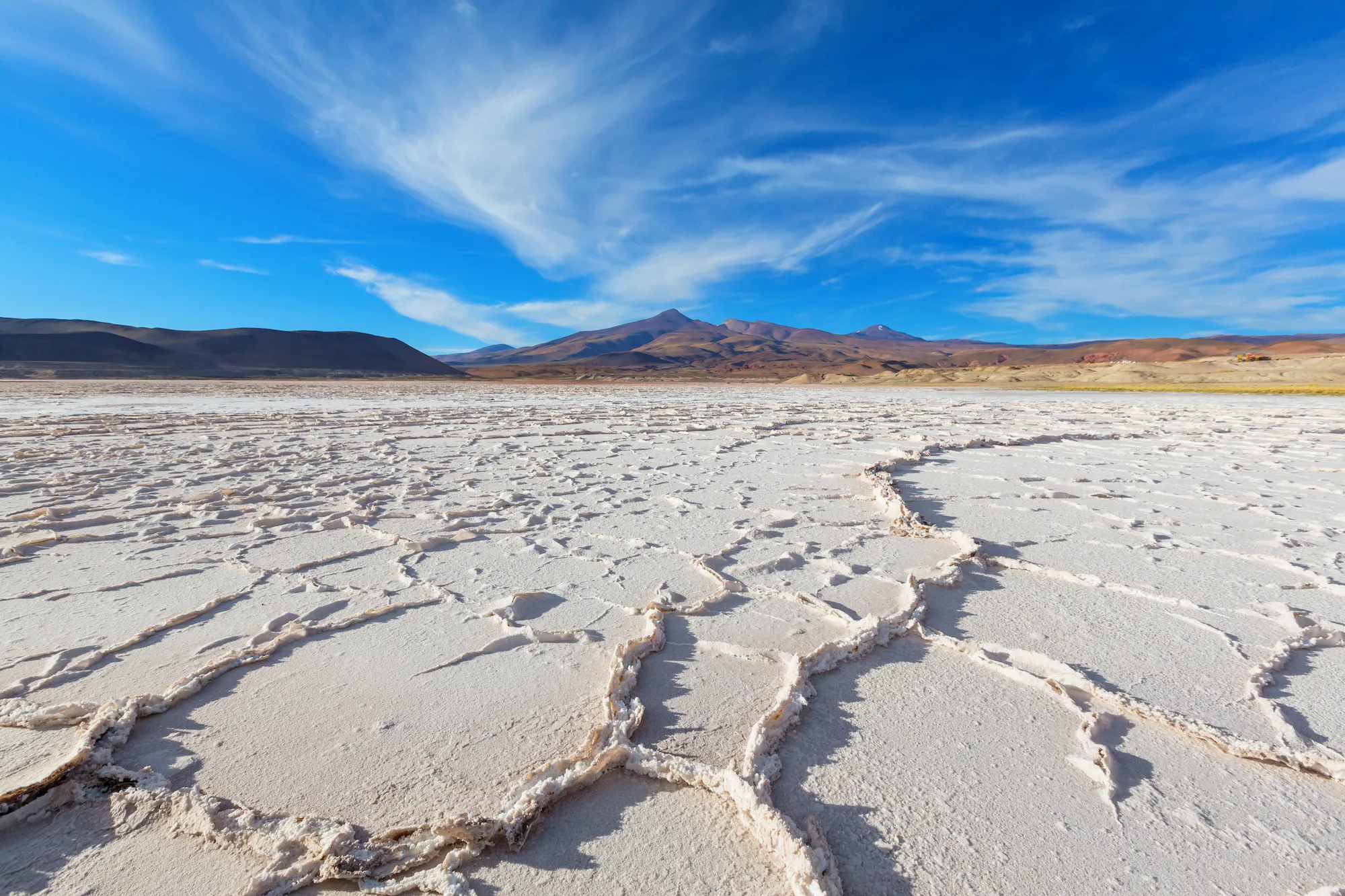
The private miner Ganfeng Lithium operates autonomously in the salt flats of northwestern Argentina. It has no direct link to China’s National Development and Reform Commission, and since 1995 it anticipated the opportunity to vertically integrate the entire lithium chain long before others realized it. It now operates in the Salar de Llullaillaco, Salta province, where it built a lithium chloride plant to process brine alongside its own solar park in an investment of close to USD 980 million.2
In Jujuy, together with the provincial public company JEMSE, it operates the Cauchari-Olaroz project, one of the most important and largest lithium extraction projects in the world at over 4,000 meters above sea level.
The project produced 34,100 tonnes of battery-grade lithium carbonate in 20253 and will expand its capacity to 85,000 tonnes by 2030. An expansion of USD 1.241 billion approved under Argentina’s large investment regime (RIGI).4 5
Every tonne that leaves Salta for a Chinese battery avoids Malacca, and no U.S. navy is watching its navigation. It may, however, run into another toll downstream with the restrictions Washington imposes through the “foreign entity of concern” regime applied to China-linked firms under electric vehicle regulations.6
Chinese companies moved the source of their critical input to the other side of the world to avoid the maritime bottleneck and the toll in Singapore. They did so through a private company but with commercial registration in their country, without the need for a trade treaty.
Argentina as an Extraction Field
Argentina’s incentive regime offers legal, exchange-rate, and tax stability for 30 years for projects exceeding USD 200 million, and Ganfeng managed to fit three successive and distinct projects under that framework in two years. Beyond controlling lithium, the company has the certainty that no future government will touch the rules during the concession, allowing it to sustain investment even during a punishing price cycle.
The cycle has left the competition by the wayside—the junior mining companies, those without financial backing after the price of a tonne of lithium carbonate fell to USD 10,000 after trading at USD 80,000 in 2022—when Ganfeng began construction in Salta—. Surviving in complex scenarios demands full industrial scale, in-house processing capacity, and a direct connection to the end market. Argentina itself exports the processed mineral but does not control its value chain, and that distinction will weigh more in the coming decade than any annual export figure. The country hosts the extraction, collects royalties, and offers legal stability for three decades at once, but it does not have control.
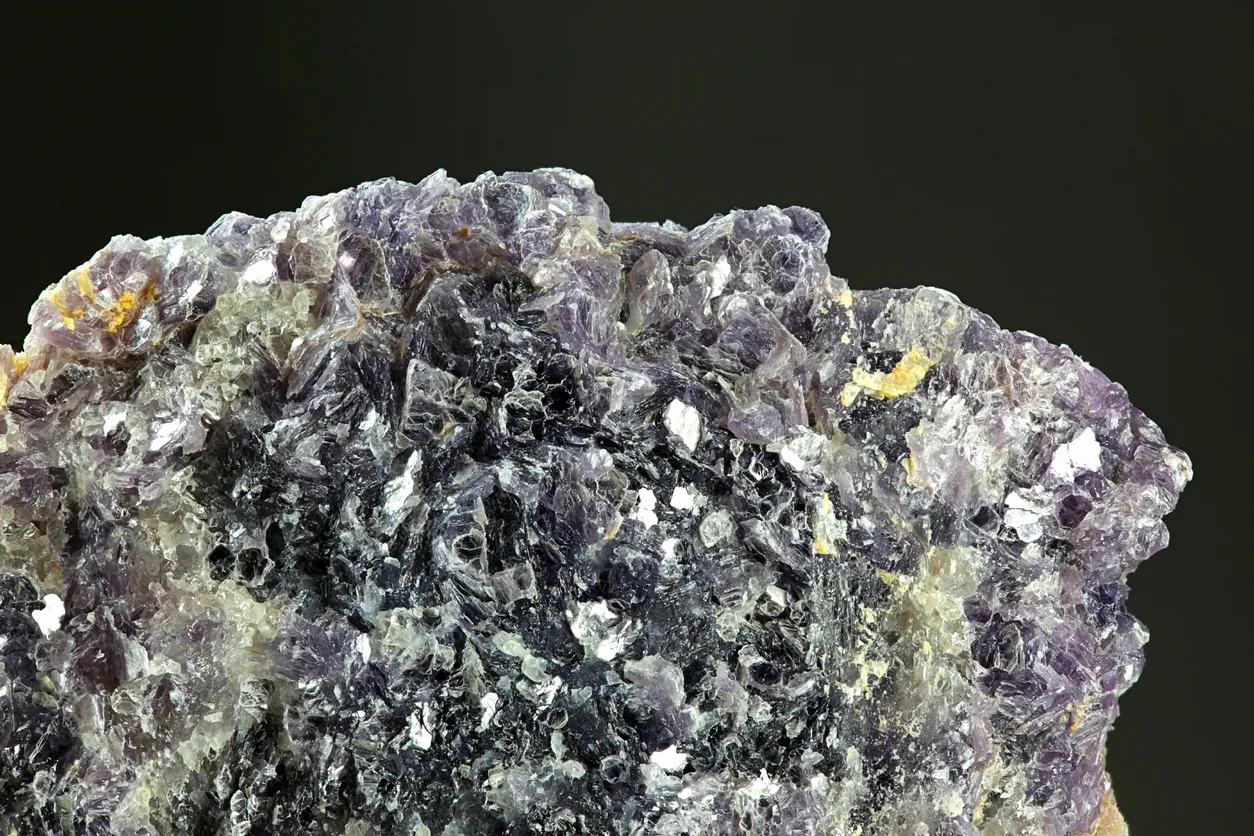
With the brutal collapse, the company is seeking a third investor for Pozuelos-Pastos Grandes instead of bearing the USD 3.000 billion cost alone.7 Bringing in a partner is a filter to eliminate competitors and consolidate the remaining margin. When Ganfeng was opening its brine plant, its Western competitors were still debating whether lithium should be seen as a national security priority or a matter of corporate sustainability. Only in July 2024 did Washington incorporate Argentina into the Minerals Security Partnership forum8, allowing it to sit at the table of the mining alliance promoted by the United States.
The Malacca Paradox
Chinese investment in the Triangle reached USD 3.200 billion spread across seven mining projects, more than double the amount tied to U.S. capital in the same period.9 China did not hesitate in the face of pressure from the Strait of Malacca, which demands aggregate scale, speed of execution on the ground, and the swiftness of a company. Not of a ministry or bilateral meetings to secure an agreement.
The firm Ganfeng decides how much lithium enters the market, tied to a logic of vertical integration and detached from any Argentine ministry. After extraction, the raw minerals go to China for processing. Chinese dominance in refining stems from industrial policy, cross-subsidies, and state-backed investment of USD 900 billion in R&D between 2010 and 202310 that solves a maritime security problem China has carried since 1993, when the country went from being a net oil exporter to depending on imports for the first time11—a vulnerability Beijing would formalize as a national security matter a decade later, under the name “Malacca paradox,” coined by President Hu Jintao.12
China controls a significant share of the global market for rare earths—lithium, nickel, cobalt, copper, etc.—more than 80% of world mine production and, most critically, almost 90% of refining and processing capacity.13 It also controls 60% of global polysilicon manufacturing and 77% of lithium-ion battery capacity.
The United States
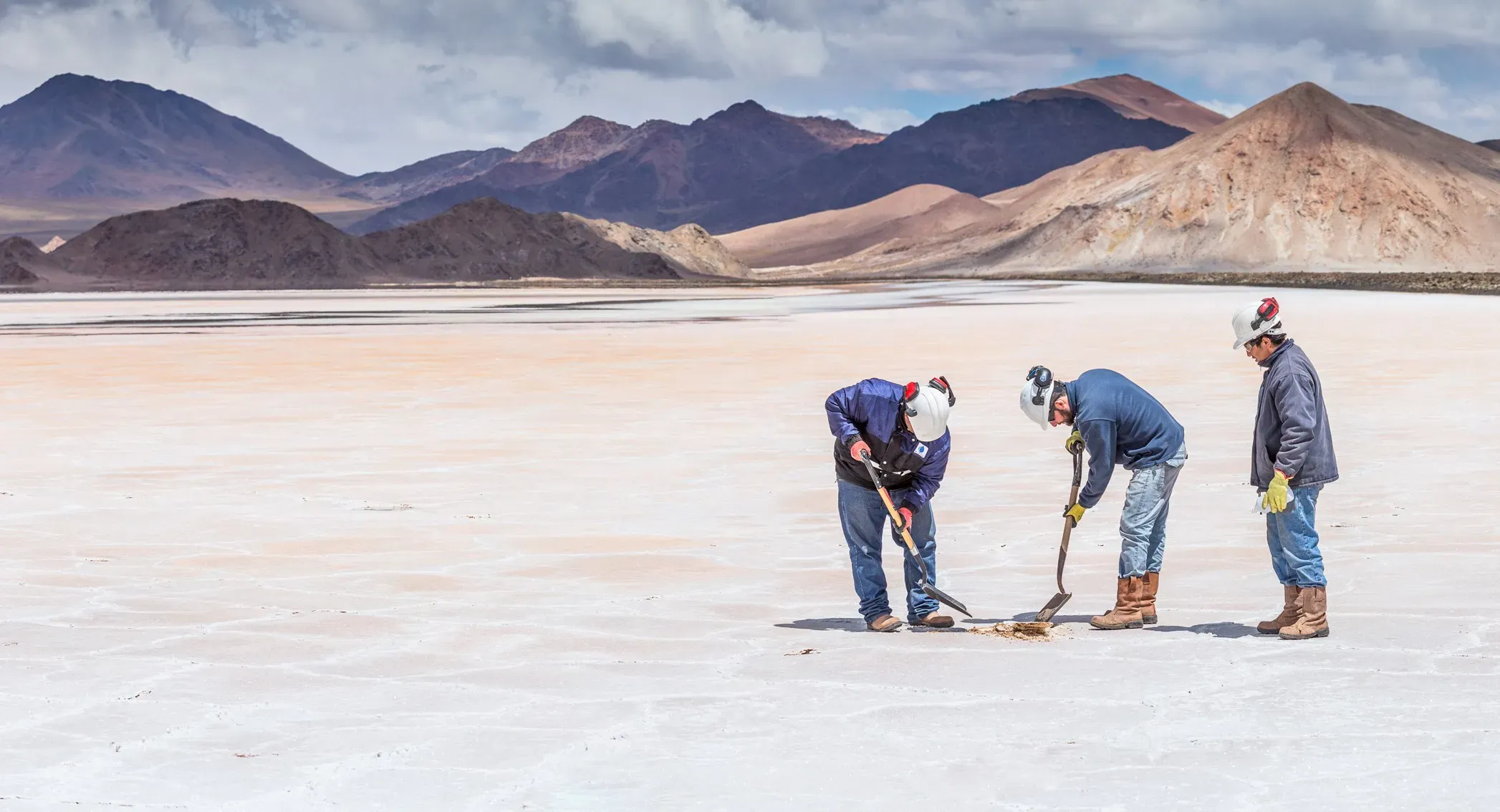
Due to the absence of domestic processing capacity and the lag in technical know-how, the mineral extracted from its only operating deposit on U.S. soil must be exported to China for refining.14 Moreover, the regulatory environment in the U.S. presents significant challenges. A mining project can take between 10 and 15 years to navigate federal, state, and local approval processes, facing frequent litigation from Indigenous communities, environmental groups, and landowners. This prolonged uncertainty raises direct operating costs and increases capital risk, as well as deterring the private investment needed to rebuild an independent supply chain.
Since 2023, China’s central government has increased exploration for critical minerals and allocated a year-on-year increase of USD 13.800 billion.15 Provincial governments have also significantly increased spending. Thus, if Ganfeng secures the third investor for Pozuelos-Pastos Grandes before the end of 2027, the integrated vertical consolidates. The pattern will repeat in other basins of the Lithium Triangle and will reduce structural dependence on Malacca a little further. If it does not succeed, and the lithium price remains depressed, the fiscal stability regime becomes a burden. Thirty years tied to a stalled project. Then it will be known whether China’s strategy toward the maritime bottleneck generated gains or was another chapter in the overinvestment cycle, one that has punished mining so many times.
Methodological note: this analysis relies on production, investment, and regulatory data publicly available as of the close of 2026, with particular attention to figures from the International Energy Agency, RAND reports on Chinese reliability in critical minerals, and U.S. Department of the Treasury guidance on foreign entities of concern under the Inflation Reduction Act. Projections on Pozuelos-Pastos Grandes depend on an uncontrolled variable—the evolution of the international price of lithium carbonate—and should be read as a conditional scenario, not a forecast. The article does not incorporate first-hand Chinese sources; the characterization of Beijing’s strategy is reconstructed from Western secondary literature, which introduces an interpretive bias the reader should weigh.
Joaquín Vigueras es Coordinador de Programas en Open Andes. Analista de riesgo político y geofinanciero con foco en mercados emergentes, América Latina y dinámicas BRICS+. Su trabajo traduce señales políticas, regulatorias y macroeconómicas en riesgo cuantificado y evaluación de escenarios para decisiones de inversión y planificación estratégica.
Bibliografía
- Anas Rakha, "South-First Connectivity: The Malacca Strait's Strategic Role," Observer Research Foundation, 2025.
- Secretaría de Minería de la Nación, "Economía estuvo presente en la inauguración de la planta de litio del proyecto Mariana" (Ganfeng Lithium / Litio Minera Argentina S.A.), Argentina.gob.ar, 12 de febrero de 2025.
- Lithium Argentina AG, comunicado de resultados anuales 2025; Shanghai Metals Market, análisis de producción y capacidad, 2026.
- Sobre la expansión RIGI (USD 1.241 millones, +45.000 t/a hasta alcanzar 85.000 t/a): Lithium Argentina AG, comunicado de aprobación RIGI Fase 2 Cauchari-Olaroz; PV Magazine, cobertura de la aprobación.
- Composición accionaria del proyecto (Ganfeng Lithium 46,7%, Lithium Argentina 44,8%, JEMSE 8,5%): comunicado de Lithium Argentina AG, íd.
- Departamento del Tesoro de EE.UU., guía final sobre "Entidad Extranjera de Interés" (FEOC), "U.S. Department of the Treasury Releases Final Rules...," 8 de febrero de 2025, citado en nspfellows.org (2025).
- Ignacio Celorrio (presidente, Lithium Argentina), declaraciones a Reuters sobre el costo del proyecto Pozuelos-Pastos Grandes y la búsqueda de un tercer inversor, replicado por Mining.com y Asian Metal. Cf. Lithium Argentina / Ganfeng, Scoping Study (Nasdaq, Mining Weekly), que sitúa la inversión de capital total en USD 3.300 millones a lo largo de las tres fases del proyecto.
- "Minerals Security Partnership," U.S. Department of State, citado en nspfellows.org (2025).
- "Lithium, Leverage, and Leadership: Countering China's Economic Influence in Latin America," National Security Policy Fellows (nspfellows.org), 2025.
- Yan Bennett, "Securitizing the Critical Minerals Supply Chain," Journal of Political Risk 13, no. 9 (septiembre 2025), nota 9, citando a Alvin Camba, "A Federal Critical Mineral Processing Initiative," War on the Rocks, 14 de abril de 2025.
- Agencia Internacional de Energía, Oil and Gas Emergency Policy: China Analysis; Erica Downs, "China's Quest for Energy Security," RAND Corporation; Kang Wu, "China's energy security: Oil and gas," Energy Policy.
- Harsh Mishra, "The Malacca Dilemma and China's Response," Modern Diplomacy, 2026.
- "How Tight Is the Chinese Grip on World's Metal Supply," Quest Metals, 18 de marzo de 2025, citado en Bennett (2025), nota 10.
- Catherine Tymkiw, "The Battle to Break China's Rare Earth Supply Chain Dominance," Area Development, 20 de marzo de 2025, citado en Bennett (2025), nota 11.
- Edward White, "China Raises State Funding for Strategic Minerals amid US Trade War," Financial Times, 20 de marzo de 2025, citado en Bennett (2025), nota 16.
Nota editorial
Este trabajo representa exclusivamente las opiniones del autor o autores. Open Andes es un think tank y editorial independiente, y no adopta posturas institucionales sobre asuntos de política pública.
SHARE KNOWLEDGE