 OPEN ANDES
Chile's Foreign Policy toward Asia-Pacific
In recent years, China and the United States have been contesting leadership within the international order, and this dispute spans the geopolitical, economic, cultural, technological, and military spheres. This geopolitical dispute affects Chile because both countries are its main trading partners, with China being its first trading partner and the United States its second. This is compounded by the fact that the Asia-Pacific region has been acquiring increasing importance on the international stage. Therefore, the thesis of this article posits that Chile faces a transition from a policy of openness toward a policy of geopolitical resilience because the diversification of its trade ties has not eliminated the concentration of its main strategic dependencies. The network of agreements built since 1990 constitutes an advantage, but it does not by itself guarantee diversification or autonomy in the face of a possible fragmentation of the international system, in which the margin of maneuver of foreign policy must be preserved in accordance with its principles and its national interests.
Presence in Asia-Pacific
Since the return to democracy in 1990, Chile developed a foreign policy centered on the defense of democracy, the defense of human rights, multilateralism, and free trade as part of its integration with the world. Along these lines, the Asia-Pacific region gained relevance for Chile and its foreign policy by virtue of its strategic and fundamental location in the process of economic opening, which was characterized, according to Briones and Dockendorff (2015), “by its pragmatism and by the emphasis on the economic-commercial aspect” (p. 121). For Chile, the Asia-Pacific region became the gateway for the process of economic opening and, given its dynamism, “made it possible to achieve important progress, such as free trade agreements, thanks to the fact that Chile was already part of regional mechanisms, which gave greater credibility to its claims in bilateral spheres” (Wilhelmy 2010, p. 132).
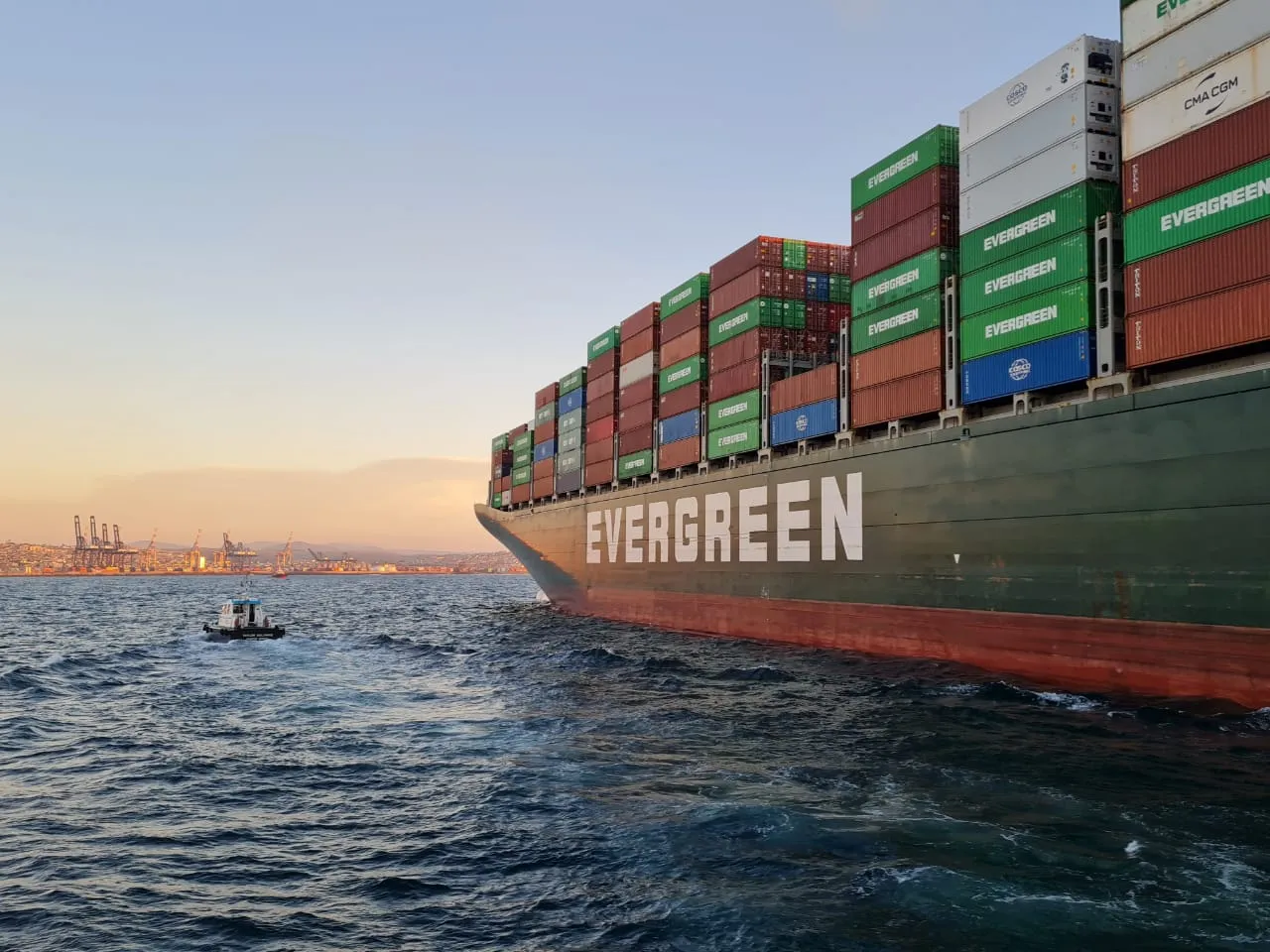
Port of San Antonio, Chile — one of the main connection points with the Asia-Pacific region.
Political leaders, through foreign policy, leaned toward integrating into that region given its projection toward the Pacific Ocean, and the Asia-Pacific region tends to be one of the most dynamic in terms of trade and economic growth (Cáceres 2022). Examples of this full integration are the cases of joining the Asia-Pacific Economic Cooperation (APEC) forum in 1994, the creation of the Pacific Alliance in 2011, the signing of various free trade agreements (see table No. 1 in the annexes), the ratification of the CPTPP in 2022, and the negotiation of trade agreements with China and the United States. Along these lines, in 2025 trade with China accounted for 32.7% and with the United States for 17% (Subrei 2026). In addition, the Asia-Pacific region had GDP growth of 4.2% in 2025, consolidating itself compared with other regions such as the Americas, Europe, and Africa as “the most dynamic region, with expansion rates close to 4% annually, driven by the growth of emerging economies and the dynamism of technological and manufacturing sectors linked to global value chains” (Subrei 2026, p. 8).
However, the geopolitical dispute between China and the United States has become a problem for Chile because they are its two main trading partners, and in the case of the United States it is also a strategic partner in defense matters. This dispute reflects the problem Chile faces in managing its foreign policy. This is because, despite the expansion of trade agreements and investments, it still maintains a weakness in the face of its dependence on its main trading partner, China, and its main strategic partner, the United States. Although it is feasible to multiply trade ties, more dependent economic relationships still persist, as in the cases of China and the United States, which was evidenced by the suspension of the Chinese submarine cable project “Chile-China Express” by the company China Mobile International, which connected Concón and Hong Kong, following pressure from the latter through the Department of State. This means that trade diversification is no longer sufficient: it must also consider the resilience of its critical infrastructure and its technological ties.
Indeed, the extensive network of treaties and integration mechanisms demonstrates openness, but not necessarily a balanced distribution of trade dependencies. It is therefore necessary to deepen trade ties with other countries in the region, reducing dependence on China and the United States through coordinated and articulated institutional arrangements in favor of defending its foreign policy principles and its national interests, bearing in mind that it must have the capacity to preserve alternatives and the resilience of critical infrastructure in the face of scenarios of geopolitical pressure. In the most adverse scenario, this could end up limiting the country’s capacity for action, the consequence of which would be subordination to the interests of another country to the detriment of Chile’s national interests.
Conclusion
Chile achieved an extensive network of trade agreements that allows it to have an advantage in an increasingly fragmented international scenario, but it does not guarantee strategic diversification. If competition between China and the United States continues to focus on areas ranging from trade to technology, supply chains, infrastructure, and critical minerals, Chilean foreign policy will have to be evaluated less by the number of trade agreements and cooperation ties it accumulates than by the margin of maneuver these provide in its positioning and defense of its national interest.
Therefore, Chile’s challenge will be to develop its strategic positioning in a context of geopolitical dispute that ends up reducing its autonomy and capacity for action. The discussion is not about moving away from China nor about moving away from the United States, but about preventing the rivalry between the two from ending up defining the limits of Chilean foreign policy, gradually reducing dependence on its two trading partners and increasing its cooperation ties with other States. This hypothesis will be refuted in the medium term if it manages to develop infrastructure and connectivity projects that do not derive from pressure or retaliation from its main trading partners in their awarding.
Annexes
Table No. 1. Free Trade Agreements and participation in integration bodies of Chile with the countries of Asia-Pacific
| Country/Body | Type of Agreement/Membership | Entry into force |
|---|---|---|
| Asia-Pacific Economic Cooperation (APEC) | Full Member | 1994 |
| South Korea | Free Trade Agreement | 2004 |
| China | Free Trade Agreement | 2006 |
| P4 | Free Trade Agreement | 2006 |
| India | Partial Scope Agreement | 2007 |
| Japan | Free Trade Agreement | 2007 |
| Australia | Free Trade Agreement | 2009 |
| Malaysia | Free Trade Agreement | 2012 |
| Vietnam | Free Trade Agreement | 2014 |
| Thailand | Free Trade Agreement | 2015 |
| Pacific Alliance | Trade Protocol and Full Member | 2016 |
| Indonesia | Free Trade Agreement | 2019 |
| Association of Southeast Asian Nations (ASEAN) | Development Partner | 2019 |
| Digital Economy Partnership Agreement (DEPA) | Full Member | 2024 |
| Comprehensive and Progressive Agreement for Trans-Pacific Partnership (CPTPP) | Free Trade Agreement | 2023 |
| Free Trade Agreement between the Pacific Alliance and Singapore (PASFTA) | Free Trade Agreement | 2025 |
Source: Prepared by the author based on information from the Undersecretariat of International Economic Relations of the Ministry of Foreign Affairs of Chile
Francisco Covarrubias Rojas es Líder de Investigación en Open Andes. Cientista político y magíster en Desarrollo y Cooperación Internacional, con foco en seguridad internacional, defensa y crimen organizado transnacional.
Bibliografía
- Briones, S. Dockendorff, A. (2015). Continuidad y cambio en la política exterior chilena en el gobierno de Sebastián Piñera (2010-2014). Revista de Estudios Internacionales, pp. 115-138. Instituto de Estudios Internacionales, Universidad de Chile. https://www.scielo.cl/pdf/rei/v47n180/art06.pdf
- Cáceres, J. (2022). APEC y la inserción económica de Chile en el Asia Pacífico. Revista Diplomacia, pp. 60-67. Disponible en: Academia Diplomática Andrés Bello. (2022). Diplomacia y Política Exterior Económica de Chile. Revista Diplomacia, edición N°147. https://academiadiplomatica.cl/wp-content/uploads/2023/05/Revista-Diplomacia-N°-147.-ok.pdf
- Cárdena, R. (2024). TPP11: En su segundo año de vigencia, envíos al bloque suben más de 10% y superan los US$14 mil millones. La Tercera. https://www.latercera.com/pulso/noticia/en-su-segundo-ano-de-vigencia-del-tpp11-envios-al-bloque-suben-mas-de-10-y-superan-los-us14-mil-millones/
- Subsecretaría de Relaciones Económicas Internacionales (2025). Acuerdos Comerciales de Chile vigentes en 2025. Ministerio de Relaciones Exteriores de Chile. https://www.subrei.gob.cl/acuerdos-comerciales/acuerdos-comerciales-vigentes
- Subsecretaría de Relaciones Económicas Internacionales. (2026). Perspectivas del Comercio Exterior de Chile y sus principales socios comerciales/año 2025. Ministerio de Relaciones Exteriores de Chile. https://www.subrei.gob.cl/docs/default-source/estudios-y-documentos/informe-de-comercio-exterior-2025-abril-2026.pdf?sfvrsn=79b019b_2
- Wilhelmy, M. (2010). La trayectoria de Chile frente a la región Asia-Pacífico. Revista Estudios Internacionales, pp. 125-141. Instituto de Estudios Internacionales, Universidad de Chile. https://repositorio.uchile.cl/bitstream/handle/2250/123763/La-trayectoria-de-chile-frente-a-la-region.pdf;sequence=1
Nota editorial
Este trabajo representa exclusivamente las opiniones del autor o autores. Open Andes es un think tank y editorial independiente, y no adopta posturas institucionales sobre asuntos de política pública.
SHARE KNOWLEDGE