 OPEN ANDES
Saudi Oil Without Its Double Exit
The land cable that held up half a continent turned out to be plugged into the same socket. Last April, the Observer Research Foundation Middle East in Dubai, UAE, analyzed a stress hypothesis combining a hypothetical closure of the Strait of Hormuz and Bab al-Mandab. The foresight exercise assumed it would put at risk around USD 10 billion per day of global trade and 22% of world oil supply. That fragile scenario was hardly reassuring for the most industrialized nations and made evident that Saudi Arabia’s geographic double exit—what seemed to shield the peninsula—would become an interdiction of both flanks if Iran and the Houthis set their minds to it.
Well, that scenario materialized on July 20 of this year when the armed and political group Ansar Allah declared a total naval blockade against Saudi Arabia.
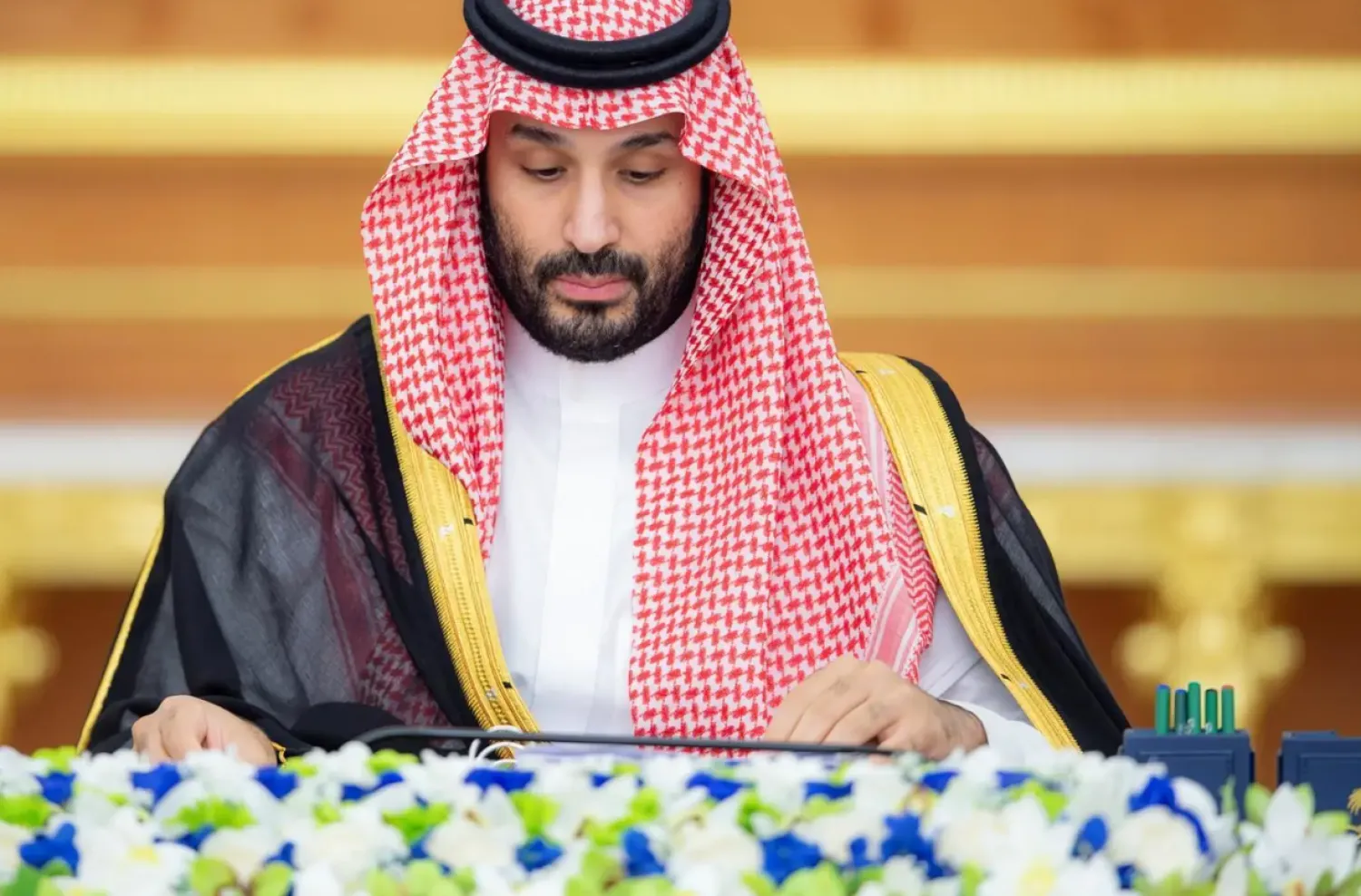
Saudi oil and the impact of the blockade on its energy corridors.
Just like the famous chaos theory trope about a butterfly’s wings influencing weather patterns on the other side of the planet, the fossil fuel energy shock due to the closure of Hormuz occurred at the same moment China was emerging as the dominant global supplier of renewable energy technology. Burned by yet another energy shock, the world is sensibly moving away from fossil fuels, ceaselessly associated with wartime disruptions, and turning to China for precisely the wind turbines, solar panels, storage batteries, and electric vehicles that the Trump administration is working so fervently to annihilate.
Since Iran carried out control of the Strait of Hormuz after the joint US-Israeli attack of February 28, the Saudis activated the East-West pipeline, Petroline, to divert crude from the Abqaiq fields to the port of Yanbu, on the Red Sea. Up to there, their strategy: a backup corridor, just in case.
Petroline has a capacity of 7 million barrels per day (bpd), and shipments from Yanbu went in one year from 973,000 to 4 million bpd in June. A huge jump. That is how Saudi Arabia did not gain logistical efficiency even though it managed to concentrate its export capacity in a single node, trusting that the other end would remain open. Moving all traffic through the back door and praying is not diversifying.
After the July blockade, the flow toward the Red Sea fell immediately. The head of crude analysis at the firm Kpler, Homayoun Falakshahi, reported a 36% drop in Saudi loadings within hours, leaving barely 1.2 million bpd transiting from the Gulf to the Red Sea in a matter of hours.
If civilization advances through challenge and response, then it is worth considering that sooner or later we will learn from this lesson. The Strait of Bab al-Mandab has a dependency on what happens in Hormuz because that is how geoeconomics works. Geo-economics. It used to be a university subject, a pompous memory of Mackinder. The strategy to diversify corridors only works if the adversary lacks the capacity to coordinate pressure on both ends at once.
The consequence exceeds the oil market.
There is an alternative route skirting the Cape of Good Hope. However, that option does not restore Saudi Arabia’s lost power; being the key to oil erodes trust. The detour adds between 10 and 14 days of transit, and between 1.2 and 1.8 million dollars in fuel per round trip. War risk insurance premiums, meanwhile, have already risen more than 1000% since the start of the conflict.
During 2025, Asia imported 14.74 million bpd of crude from the Middle East. Almost 60% of its total purchases. The dual closure eliminates the bypass that partially sustained those economies during the Hormuz crisis. In complex systems far from equilibrium, even small inputs can have disproportionately large effects. The black swans of disorder are always waiting in the wings. Stability is never guaranteed. The case explains what happened in Bangladesh when it entered a crisis of its fuel reserves for barely 9 to 14 days, 4 working days. Saudi energy vulnerability is contagious to the Global South.
Days after the blockade, Riyadh asked for help. On July 30, fourteen countries under Saudi leadership signed the Multinational Maritime Defense Alliance to escort the traffic that Petroline guaranteed. Bangladesh, the same nation nine days away from running out of fuel, signed the statute, as did Turkey and Pakistan. The first meeting of planners was held three weeks after the announcement. By then the institutional framework was still being defined and the vessels were still being diverted. That shift in the regional security calculus would have been unthinkable for Riyadh months earlier. What energy resilience doctrine survives when the backup design itself becomes the map the adversary uses to sequence its closure? None of the ones we know. Saudi Arabia ended up subcontracting—with the name of a coalition and a permanent headquarters in Riyadh—the guarantee of transit that its own infrastructure could not sustain.
Whether it is Middle East oil, China’s rare earth minerals, or Taiwan’s semiconductor supremacy, the specialization of supply chains, combined with just-in-time logistics, has created an imbalance in the world economy. The Saudi double exit failed because it was a trap. When a disruption occurs, production and distribution through a vast but shallow system stall. The critical nodes of connectivity in otherwise efficient networks become chokepoints. This is the 21st century, and if your contingency plan fits on a single supply line, it is not contingency. It is a sentence for an entire economic model.
Sabrina Langer es Lead Futurist en 2050 Futures Lab y Senior Policy Analyst en la OCDE. Socióloga graduada de la Universidad de Buenos Aires (UBA) con una maestría en Ciencias Políticas y de Gobierno de Sciences Po, cuenta con una sólida trayectoria internacional en investigación estratégica y políticas sociales, habiendo trabajado en instituciones como la FAO y la OCDE. Actualmente es colaboradora de Open Andes.
Nota editorial
Este trabajo representa exclusivamente las opiniones del autor o autores. Open Andes es un think tank y editorial independiente, y no adopta posturas institucionales sobre asuntos de política pública.
SHARE KNOWLEDGE